Table of Contents
Binance’s European Licence Challenges: An Overview
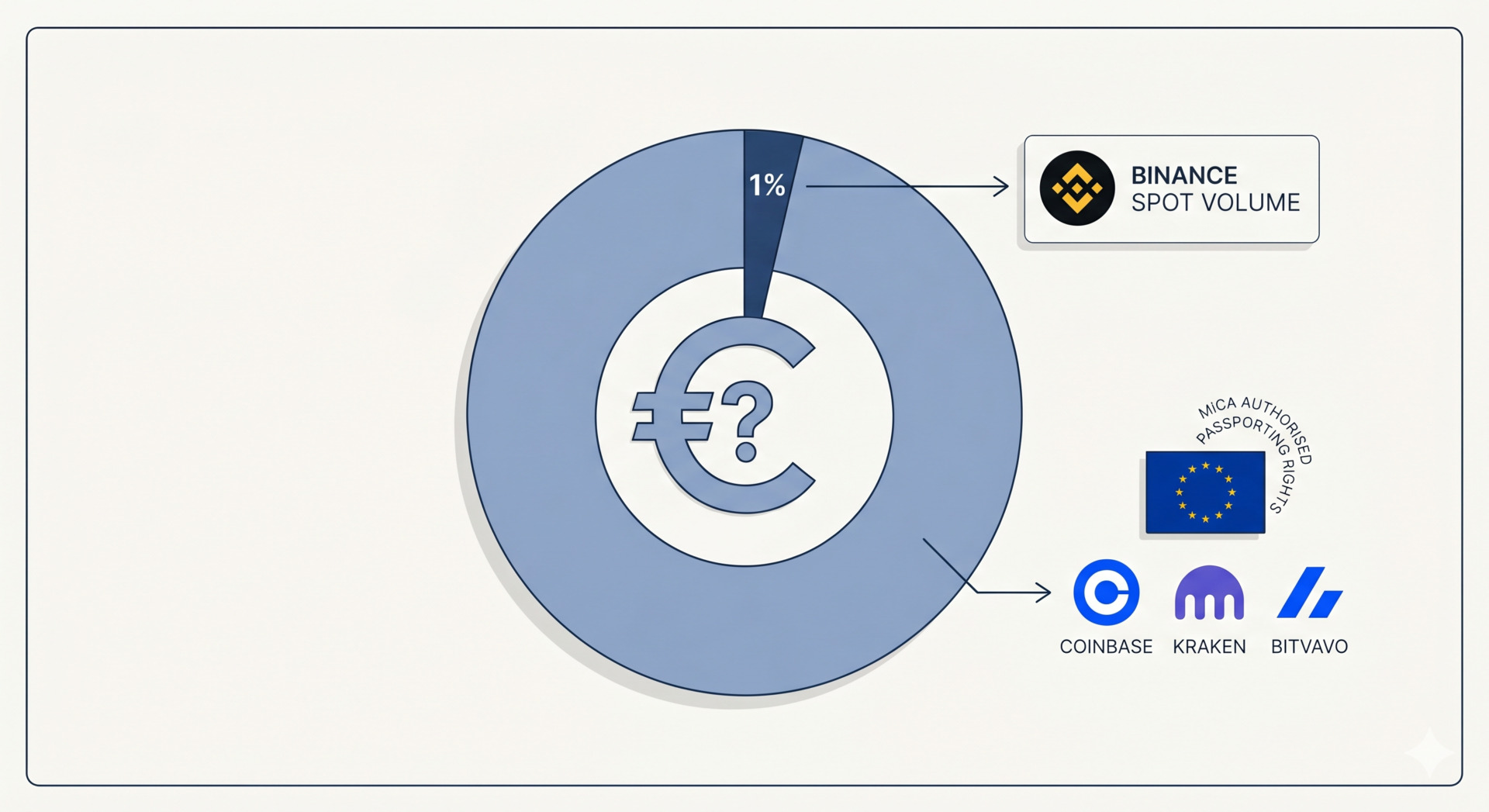
Recent data highlights that euro-denominated trading on Binance constitutes merely 1% of the exchange’s overall global spot volume, suggesting that potential regulatory challenges in Europe may have limited repercussions for the platform. This information, revealed by CryptoQuant, indicates that despite being the world’s largest cryptocurrency exchange, Binance’s exposure in Europe is relatively minimal.
Euro Trading Volume Insights
Analyst Maartunn from CryptoQuant noted that Binance’s euro trading volume typically fluctuates between US$100 million (approximately AU$143 million) and US$250 million (around AU$357.5 million) daily in 2026, with occasional peaks exceeding US$600 million (approximately AU$858 million). Maartunn emphasised that “Binance’s inflows remain globally distributed, which might mitigate the effects of potential regulatory challenges under the Markets in Crypto-Assets (MiCA) framework.”
Potential Licence Rejection from Greece
The backdrop to this situation includes the Hellenic Capital Market Commission in Greece, which is reportedly poised to reject Binance’s application for a European licence in line with the MiCA regulations by the upcoming deadline of July 1. If Binance’s application is denied, it will complicate the exchange’s ability to operate across the EU, as obtaining clearance in just one member state grants access to all 27 member countries.
In contrast, rivals such as Kraken, Coinbase, and Bitvavo have successfully acquired MiCA authorisation, thereby securing essential passporting rights which would facilitate their ability to cater to the European market effectively. A rejection for Binance would leave it struggling to find alternatives to continue operations in the EU.
Implications of the July 1 Deadline
The significance of the July 1 deadline cannot be overstated, as it heralds the conclusion of a transitional period during which exchanges were allowed to function while awaiting the assessment of their applications. Should Greece deny Binance’s application, it would effectively strip the exchange of its legal framework to serve EU customers under the new regulatory landscape.
Despite this, the relatively low percentage of euro-denominated trading at Binance offers some leeway. Data from Kaiko reported in December 2024 indicated that Binance, alongside Bitvavo, Kraken, and Coinbase, combined, comprised over 85% of the euro-denominated crypto trading volume. This statistic underscores Binance’s critical role in the European trading environment, despite its minimal euro trading share when viewed globally.
The Broader Landscape Post-MiCA
A withdrawal from the EU market would greatly benefit its authorised competitors, who are already positioned to absorb any business Binance might lose. Following the implementation of MiCA, the market has seen only about 210 of the more than 1,200 crypto-asset service providers achieve full authorisation, indicating a significant regulatory squeeze that could lead to further consolidation in the sector, according to ESMA data referenced by analyst Merlijn Geurds.
Summary
In summary, while Binance faces potential regulatory hurdles with its licence application in Greece ahead of the MiCA deadline, the impact of such a setback may be mitigated by its low euro trading volume. Competitors have moved ahead in securing regulatory approvals, signalling a shifting landscape in the European cryptocurrency market. The implications of these changes could influence how exchanges operate, compete, and position themselves in response to evolving regulatory frameworks.