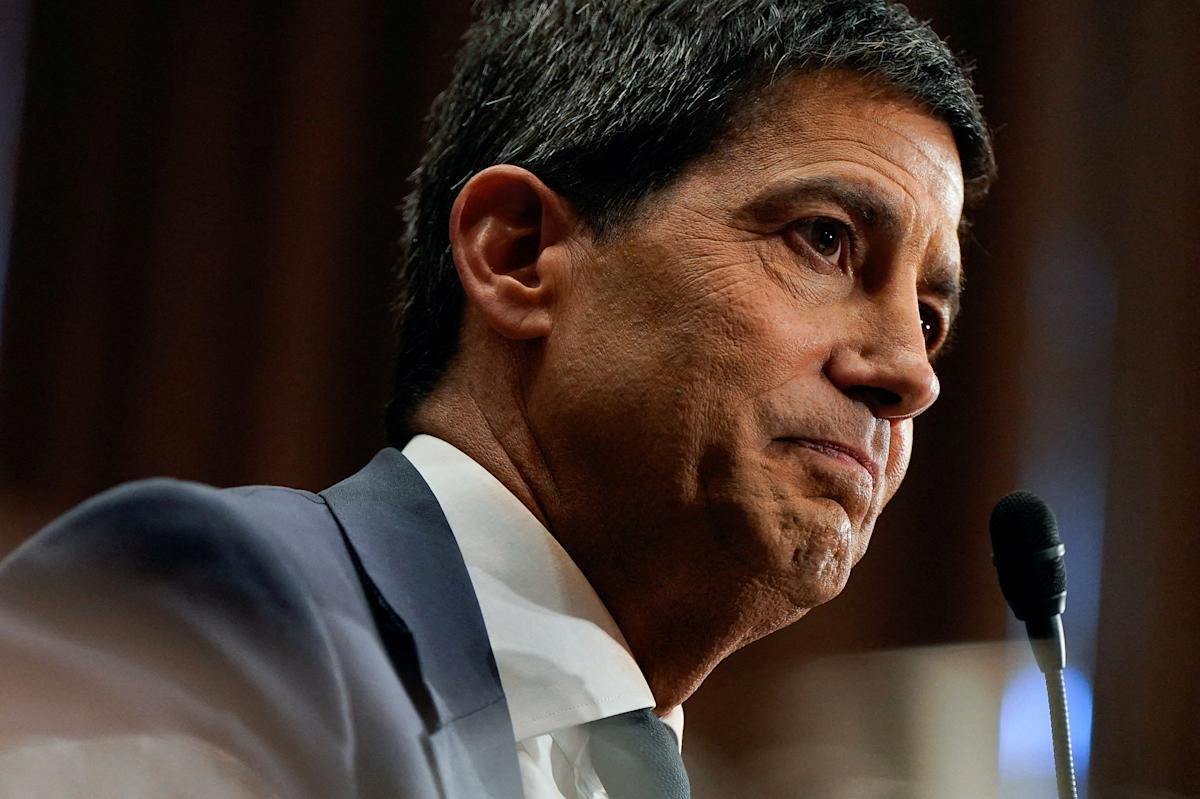
Senate Confirms Kevin Warsh as New Chairman of the Federal Reserve
On Wednesday, the U.S. Senate approved Kevin Warsh as the new Chairman of the Federal Reserve, with the confirmation vote concluding at 54-45. Notably, Democratic Senator John Fetterman from Pennsylvania joined the Republicans in supporting President Trump’s nominee. Warsh’s appointment comes amidst ongoing calls from the White House for a reduction in interest rates.
Warsh’s leadership arrives at a critical juncture when inflation has consistently exceeded the Fed’s 2% target for more than five years, further complicated by tariffs and surging oil prices due to escalating Middle Eastern conflicts.
Recent inflation statistics serve to highlight the challenges Warsh is set to face: wholesale prices surged 6% in April, largely driven by increased energy costs. Moreover, a report on consumer prices indicated that inflation is expanding as rising oil prices are being passed to consumers.
Krishna Guha, head of economics and central banking strategy at Evercore ISI, commented, “The April CPI release underlines the challenge facing Warsh… and the distance the inflation data needs to travel back in favour of disinflation before the FOMC could consider reducing rates further.” Guha also pointed out that this data strengthens the case for the hawkish minority that advocates for a possible increase in rates.
Warsh will be at the helm for a four-year term after also being confirmed for a 14-year tenure as a governor. Jerome Powell, whose term as chair concludes on Friday, has chosen to remain on the Board of Governors.
Inflation Challenges Ahead
Last year, prior to his nomination, Warsh expressed optimism regarding advancements in artificial intelligence driving productivity improvements, thereby reducing inflation and allowing for rate cuts. He also viewed tariffs as potentially temporary causes for price hikes. However, recent developments related to ongoing conflicts have complicated this narrative.
During his confirmation hearing, Warsh noted that the U.S. economy is still grappling with the inflationary aftershocks induced by the pandemic and highlighted the necessity for a revised inflation assessment framework. He advocated using "trimmed averages" of inflation data to remove outliers, asserting that the underlying inflation trend appears "somewhat improving."
Christian Floro from Principal Asset Management noted, “Warsh seems less concerned about inflation persistence than many current Fed officials… implying he sees underlying inflation pressures as materially cooler than headline data would suggest.” However, framing this viewpoint may prove challenging amidst the current economic landscape.
The Consumer Price Index (CPI) rose to 3.8% in April, up from 3.3% in March, with energy prices contributing to 40% of this increase. Core inflation, excluding food and energy, registered a rise to 2.8% from 2.6%.
There’s growing concern among Fed officials, including Chicago Fed President Austan Goolsbee, regarding the persistence of service-related price inflation, which is often insulated from external factors like oil price shocks.
Boston Fed President Susan Collins articulated her view on maintaining the Fed’s “slightly restrictive” monetary policy, emphasising that five years of above-target inflation has curtailed her patience for another supply shock.
The Path Ahead
Even before recent inflation data, some Fed officials had begun to question whether the rate cuts should be reconsidered in light of the ongoing oil price shock. Chris Waller, a Fed governor who previously championed rate cuts, now advocates for vigilance about inflation, reiterating that a series of shocks could cause prolonged elevated inflation levels.
Cleveland Fed President Beth Hammack echoed these sentiments, questioning whether ongoing shocks were truly temporary or contributing to a sustained inflation mindset among consumers and businesses.
Dissent from three Fed members regarding potential rate cuts shows a growing chorus within the Fed advocating for communications reflecting that the next move could either be a rate increase or a cut, contingent on economic developments.
Outgoing Chair Jerome Powell noted in his last press conference that the Fed’s rate-setting committee is gravitating towards a more neutral stance. Meanwhile, traders currently predict that rates will remain stable for the remainder of the year, with a 20% chance of a hike in October and a 30% chance in December.
Warsh expressed a desire for “messier” discussions regarding interest rate decisions, which could enhance economic decision-making. However, any divergence from his views, especially in the context of President Trump’s expectations for lower rates, could provoke tension.
Experts, including Guha, predict that "no majority for renewed consideration of cuts" will manifest until inflation indicators show significant improvement, particularly in relation to tariffs, oil prices, and the impact of AI on long-term inflation trends.
Warsh’s tenure is set against a backdrop of scrutiny concerning Fed independence, especially given the administration’s vocal preference for lower rates. The upcoming months will be pivotal in determining the trajectory of U.S. monetary policy and inflation management under his leadership.