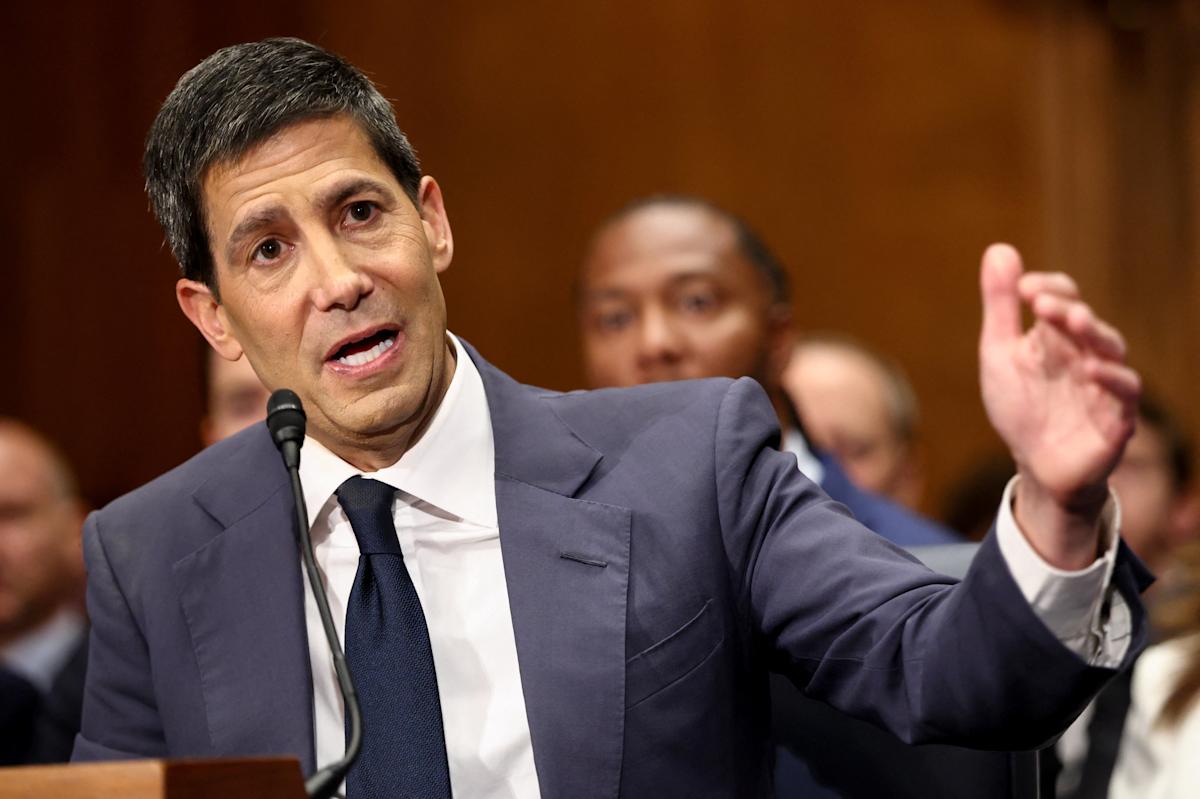
During a recent confirmation hearing in Washington, Kevin Warsh, nominated by President Trump to chair the Federal Reserve, stated unequivocally that the President did not pressure him to commit to lowering interest rates as a condition of his appointment. When questioned by Senator John Kennedy about whether Trump had directly urged him to agree to any specific interest rate decisions, Warsh firmly denied the assertion, emphasising that no such discussions occurred.
The subject of Federal Reserve independence arose multiple times in the hearing, coinciding with Trump’s public comments expressing a desire for lower interest rates during a CNBC interview. The hearing took on a distinctly partisan character, with Democratic senators challenging Warsh on Trump’s previous criticisms of the Fed and pressing him to clarify his substantial financial holdings, which reportedly exceed $100 million. Senator Elizabeth Warren of Massachusetts accused Warsh of being manipulated by Trump, describing him as the President’s “sock puppet.”
In contrast, Republican senators defended Warsh, highlighting his extensive background with the Federal Reserve. Senator Katie Britt from Alabama described him as “the right man for the job at the right time” given the current economic climate.
Warsh was critical of the Fed’s past actions, noting the ongoing effects of pandemic-induced inflation and specifically pointing out policy missteps made during 2021 and 2022. He advocated for a leaner balance sheet, suggesting that had the Fed maintained a smaller balance sheet, interest rates could potentially be lower, inflation more manageable, and the economy stronger.
The nominee also addressed the topic of artificial intelligence, suggesting it could positively influence productivity and price stability over time. However, he acknowledged potential employment implications, advocating for the Fed to consider these factors when making monetary policy decisions.
Warsh described his vision for a more deliberative approach within the Federal Open Market Committee (FOMC). He favoured dynamic discussions where members engage in candid dialogue rather than rely on pre-prepared remarks, implying that such robust debates could lead to improved decision-making and quicker corrections of errors.
Despite his nomination, a vote for Warsh’s confirmation has yet to be scheduled, with one significant hurdle being retiring Republican Senator Thom Tillis. Although supportive of Warsh, Tillis has indicated he would withhold his vote until the investigation concerning current Fed chair Jerome Powell is resolved.
Overall, Warsh’s candidacy to lead the Fed represents a pivotal moment as he navigates the contentious atmosphere surrounding Federal Reserve policy, especially amidst scrutiny from both sides of the political aisle. The developments leading to his confirmation—or lack thereof—will have implications for the future of U.S. monetary policy.