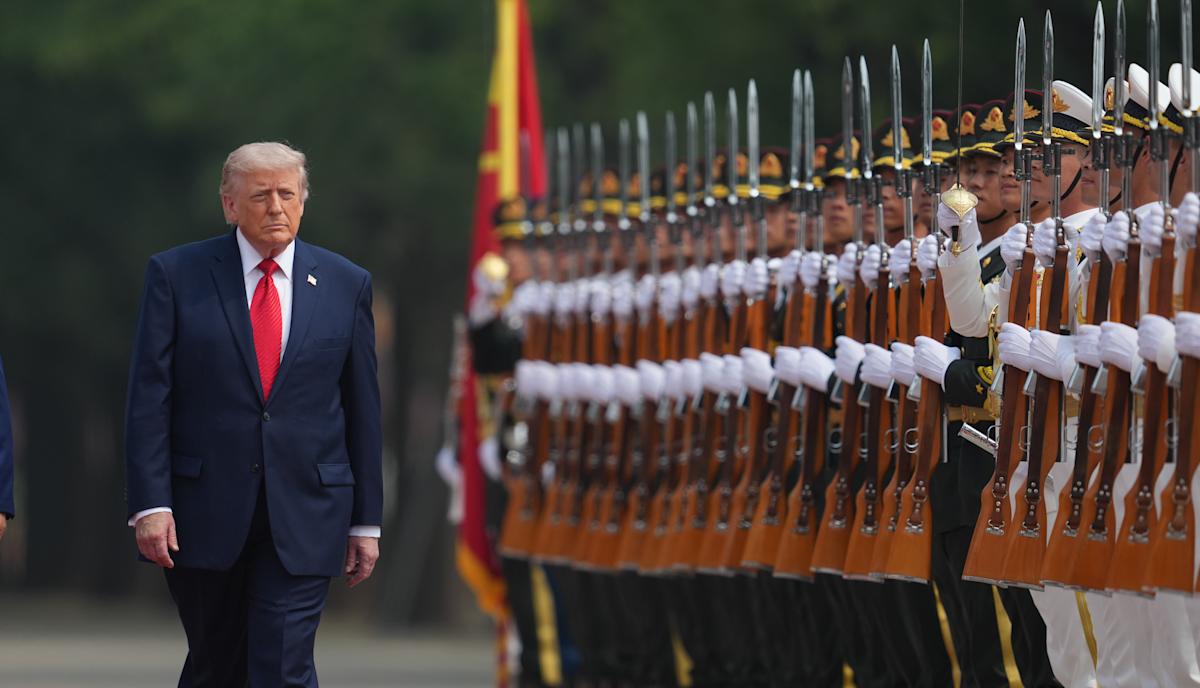
In a significant closed-door meeting between President Donald Trump and Chinese President Xi Jinping, an agreement was reached regarding the imperative to keep the Strait of Hormuz open and free from militarisation and tolls. However, the initial gathering did not lead to substantial progress on the ongoing war in Iran, nor did it yield any firm commitments from China, despite the US hoping to encourage Beijing to exert pressure on Tehran for renewed negotiations.
Jorge León, head of geopolitical analysis at Rystad Energy, noted that while the United States is keen to use this meeting as leverage to persuade China to help bring Iran back to the negotiating table, Beijing may not feel incentivised to do so without clear benefits, such as avoiding a severe energy shock or gaining concessions from Washington.
Traffic through the strategically vital Strait of Hormuz, which previously accounted for approximately 15 million barrels of oil per day, remains constrained due to the conflict, leading to a dramatic spike in oil prices and energy costs globally. Since the war’s inception, Brent crude and US WTI futures have surged around 50%, causing significant increases in prices for refined products like diesel and jet fuel.
Internally, the Trump administration is facing pressure to de-escalate its involvement in the Middle East, with the conflict proving unpopular among the American public ahead of midterm elections. The ongoing war has also driven average gasoline prices up significantly, now exceeding $4.50 per gallon, compared to $3.18 a year ago.
For China, the conflict complicates its procurement of oil from Iran, as the latter has become a crucial supplier due to US sanctions that have hampered flows from countries like Venezuela and Russia. China sources the majority of Iranian crude oil, significantly supporting Iran’s economy amidst US isolation.
During the summit, Xi Jinping indicated interest in purchasing more oil from the US to mitigate his country’s reliance on Middle Eastern supplies, which account for nearly half of its imports. Nonetheless, China’s net seaborne imports have dropped, as the nation has been stockpiling oil in strategic reserves.
While both leaders acknowledged that Iran should not develop nuclear weapons, China has been cautious, opting for risk-averse strategies such as reducing exports of refined products rather than engaging more directly in the conflict.
This difficult situation for the US appears to provide an advantage for Xi, as China can remain resilient in the face of US sanctions while diverting American military resources away from its own interests in the Pacific region. Xi warned Trump that mismanagement of relations regarding Taiwan could lead to significant challenges in their bilateral relationship.
The latest update indicates that the ceasefire in the region remains fragile, with reports of Iran seizing a commercial vessel near the UAE, adding to the increasing tension. As the war continues to impact global energy markets and US military focus, analysts suggest that China may see little advantage in actively assisting the US in resolving the crisis.
The current dynamics present both challenges and opportunities, highlighting the intricate interplay of energy security, international relations, and geopolitical strategy, as China navigates its approach to a conflicted region while managing its own energy needs.