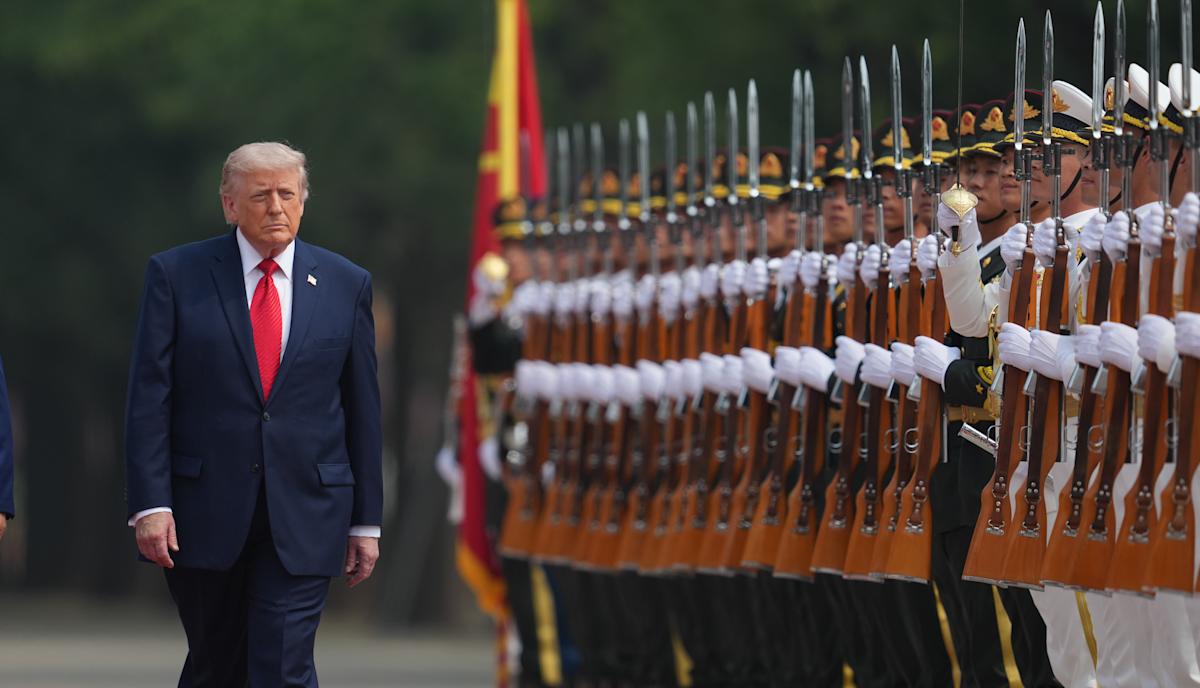
In a recent closed-door meeting between US President Donald Trump and Chinese President Xi Jinping, both leaders acknowledged the necessity of keeping the Strait of Hormuz open and free from militarisation or tolls. Despite this diplomatic moment, little significant progress was made regarding the ongoing war in Iran, with no explicit commitments from China to provide further assistance, which the White House hoped for before the talks.
Experts suggest that the US aimed to leverage this meeting to encourage China to exert pressure on Iran to return to negotiations. However, geopolitical analyst Jorge León from Rystad Energy indicates that China is unlikely to take a more active role unless it perceives a clear benefit, such as avoiding an energy crisis.
Traffic through the Strait of Hormuz, critical for oil transportation, remains severely disrupted due to the conflict. The waterway was previously responsible for moving approximately 15 million barrels of oil daily, but the war has led to a surge in crude oil prices, with both Brent and WTI crude rising by about 50%. The ongoing situation has exacerbated inflation in the US, pushing average gasoline prices to $4.50 per gallon, up from $3.18 the previous year.
China’s reliance on Iranian oil complicates its position in this conflict. Although China imports a significant portion of its oil from Iran, it has also diversified its sources. The country has strategically built up strong reserves, ensuring less dependence on Middle Eastern oil.
While Xi expressed interest in increasing US oil imports to lessen reliance on the Middle East, his commitment to actively assist the US in ending the war remains cautious. Analysts highlight China’s obsession with energy security as a driving factor for its measured approach, leading to a focus on alternative energy sources while maintaining its relationship with Iran, which now provides critical support amid US sanctions.
In the broader context of US-Iran relations, the war has allowed Iran to maintain a strategic upper hand, with reports indicating a recent seizure of a commercial vessel near the UAE. This incident further undermines the fragile ceasefire between the US and Iran, which has been under threat since the US initiated a now-cancelled operation to guide ships through the Gulf.
Most concerning for the US is the perception that its military focus is shifting towards the Middle East at a time when tensions with China over Taiwan intensify. Xi issued a warning about the potential fallout from mishandled relations regarding Taiwan, suggesting that increased US engagement in the Middle East could result in a dangerous dynamic for US-China relations.
Ultimately, while there were diplomatic gestures made during the Trump-Xi meeting, the commitment from China to actively assist in resolving the Iranian crisis remains ambiguous, as Beijing continues to prioritise its own energy security and broader strategic interests.
In summary, the recent US-China discussions highlighted the complexities of the ongoing Iranian conflict, the importance of the Strait of Hormuz for global energy markets, and the delicate balance of geopolitical relationships amidst growing tensions.