Table of Contents
Solar Energy Solution for Apartment Residents Gaining Momentum
As the cost of living escalates, more Australian households, especially apartment dwellers, are seeking ways to reduce their electricity bills. Historically, residents of apartment buildings have found it challenging to tap into the advantages of solar energy due to infrastructural constraints and the complexities involved in strata management. However, recent government initiatives are making solar panel installations more accessible and affordable for apartment blocks, and residents are encouraged to seize this opportunity before a critical deadline.
Government Initiative: SoAR Program
The New South Wales (NSW) and Federal governments have unveiled the Solar for Apartment Residents (SoAR) program, which covers up to 50% of the installation costs for shared rooftop solar systems, with maximum funding of $150,000 per project. Launched in February 2022, the initiative is set to close its application window at the end of March 2023.
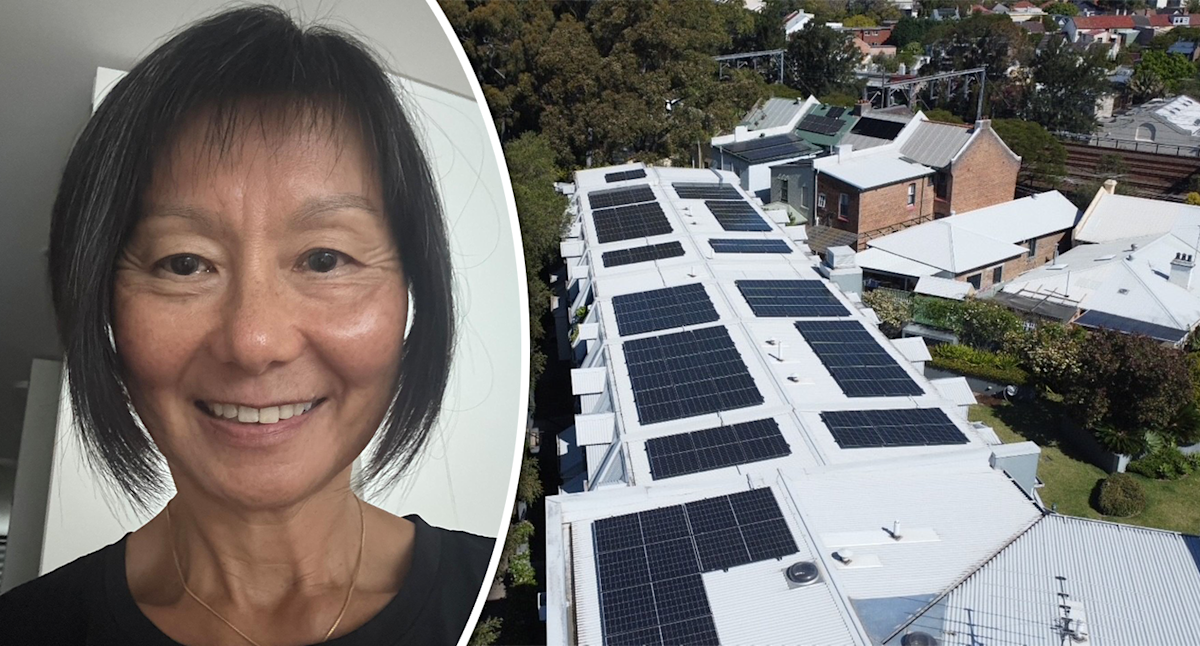
Veronica Tseng-Donald, a Sydney homeowner, was among the first to utilise this grant for her 22-unit apartment block in Newtown. She reported that residents have already begun to see reductions in their electricity expenses.
Significant Savings Documented
According to Tseng-Donald, early reports from residents indicate notable savings post-solar installation. For instance:
- Three-bedroom townhouses have saved approximately $45 to $50 per month, translating to around $600 annually.
- One-bedroom apartments are saving about $30 per month, or $360 per year.
- Two-bedroom units see savings around $35 to $40 monthly, totalling $480 annually.
The actual savings depend on a resident’s electricity retailer, the costs of their energy consumption, and whether they benefit from feed-in tariff credits.
Overcoming Barriers to Adoption
Initially, the move towards solar energy faced obstacles such as high costs and reluctance from many owners, particularly landlords who do not directly benefit as their tenants pay the bills. Owner-occupiers are also wary of upfront expenses since such investments cannot be claimed as tax deductions.
The SoAR grant has incentivised both investors and owner-occupiers alike by covering around 42% of the overall solar installation costs, making it a compelling option for strata residents.
At Tseng-Donald’s Newtown block, the total cost for the solar system stood at $131,000 (excluding GST). Thanks to the SoAR programme, they saved $54,000 on installation costs, reinforcing the financial viability of solar energy.
Additional Benefits and Installation Details
One of the standout features of the Newtown installation is the clever use of a capital works fund to manage the project costs, eliminating the need for additional levies among residents. The building now accommodates solar panels, inverters, and SolShare technology, which efficiently distributes energy across the various units. This innovative approach was implemented by Solahart Industries and marks a significant advancement in strata solar power projects.
Future Prospects and Continuing Need for Action
With approximately one in five homes in NSW being apartments, yet only around 3.5% connected to solar energy, there remains tremendous potential for growth in this sector. The government estimates that apartment residents could potentially save up to $600 on their annual energy bills with solar.
Energy Minister Chris Bowen has reiterated the government’s commitment to making rooftop solar both cheaper and more accessible, advocating for universal access to cleaner energy solutions.
Conclusion
Given the deadline for the SoAR program looms on the horizon, stakeholders are urged to act promptly. Tseng-Donald has not only benefitted from the Newtown project but has advocated for similar installations in other residences, such as her three-bedroom terrace in Camperdown. Here, she secured a $28,700 government grant towards a $68,400 installation, yielding personal savings of $50 per month.
As more apartment complexes take advantage of these programmes, it is clear that solar panels could soon become a staple in urban Australia, empowering residents to mitigate their energy costs and embrace sustainable living.