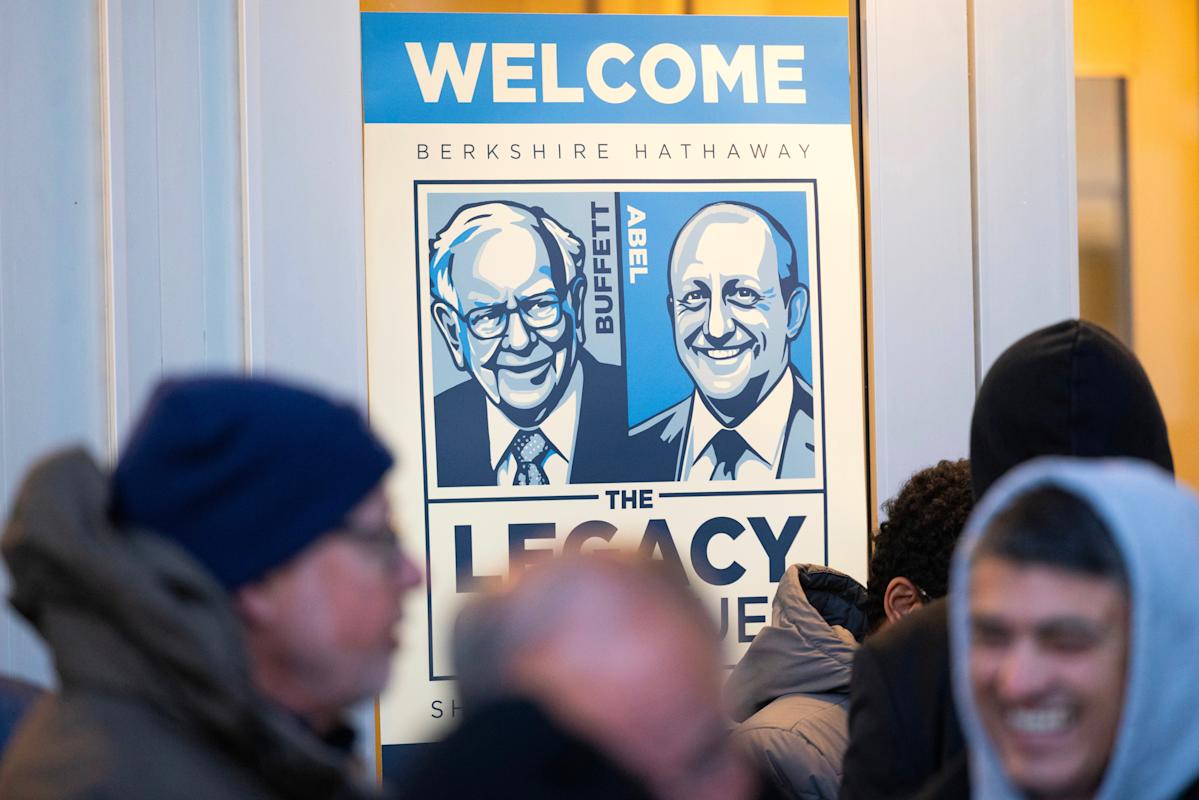
Berkshire Hathaway’s annual shareholder meeting on May 1, 2026, was notable for being the first without Warren Buffett actively participating as the emcee. However, the legendary investor, who remains the chair of Berkshire’s board, made an intriguing appearance through a deepfake video that opened the Q&A session. The sequence began with a video question purporting to be from “Warren from Omaha,” who humorously introduced himself, highlighted his extensive ties to Berkshire stock, and sought advice on why shareholders should retain their holdings for the long term.
The tone shifted promptly when Greg Abel, CEO of Berkshire Hathaway, clarified that the video was indeed a deepfake, created without any input from Buffett. He commented on the profound implications of such technology, which can replicate voices and appearances using publicly available information. This dialogue on deepfakes is particularly pertinent given Buffett’s ongoing concern about scams leveraging his image and voice, with previous warnings about the risks posed by deepfakes.
Cybersecurity threats have become increasingly critical for companies like Berkshire. During the meeting, Abel underscored the significance of these risks, stating that they are now a central part of the company’s risk management strategy. He elaborated on the various cyber threats facing the company, which include hacks, phishing schemes, and denial-of-service attacks, all of which could lead to considerable financial losses and reputational damage.
This acknowledgment of cyber risks is echoed in Berkshire’s annual report, where such vulnerabilities are outlined in detail. The report highlights the reliance on technology across all business operations, indicating that any significant disruptions could have serious consequences.
While the recognition of cybersecurity threats at the shareholder meeting was crucial, it also pointed to a broader complacency in the market regarding these risks. Despite the increasing frequency of cyber incidents, discussions about such threats remain surprisingly rare in financial circles. Notably, recent surveys, such as Bank of America’s Global Fund Manager Survey, did not rank cyber threats among the top “tail risks,” suggesting that many investors may not fully appreciate the potential fallout from such vulnerabilities.
This oversight could signal trouble. Historical patterns suggest that the most destabilising risks tend to be under-discussed, leading to market volatility when those risks eventually materialise and impact prices negatively. With the rise of artificial intelligence, which presents its own set of risks, vigilance has never been more critical.
During the Q&A, Buffett shared his apprehensions regarding the risks posed by emerging technologies like AI. He candidly remarked on the unpredictability of AI developments, particularly in a world where several countries possess nuclear capabilities. “It’s scary,” he admitted, noting the potential consequences if AI is not responsibly managed.
The integration of technology into investment strategies carries inherent risks. As Buffett pointed out, the world of investing is fraught with uncertainties, and the potential for adverse events always looms overhead. Stakeholders must remain alert to these evolving threats and rely on business leaders and policymakers to proactively address them.
In conclusion, while technology offers numerous benefits, it also presents significant challenges, underscoring the need for heightened awareness and strategic planning to mitigate the associated risks.