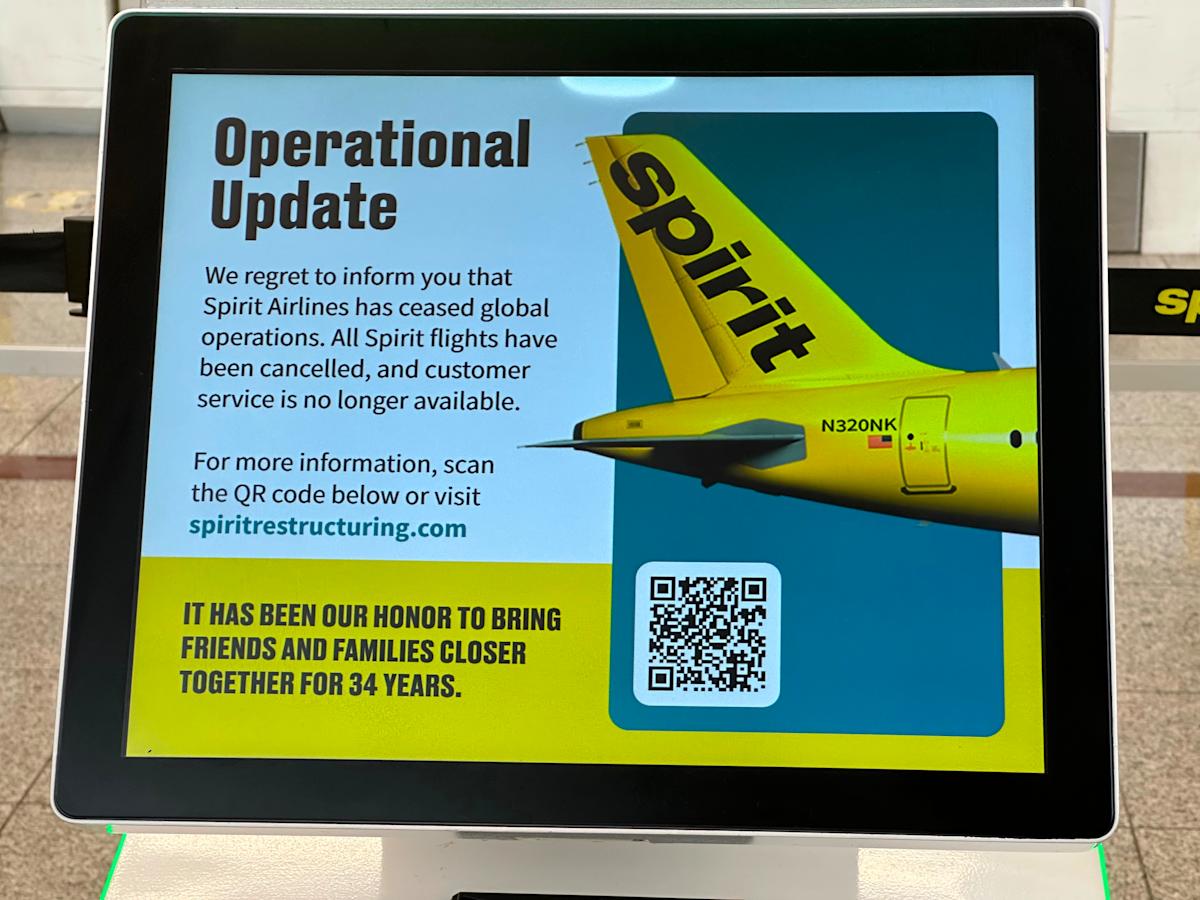
The End of Spirit Airlines: A Turbulent Farewell
Budget airline Spirit Airlines (FLYYQ) has officially ceased operations as of 3 a.m. ET on Saturday. This closure, which comes after a tumultuous history marked by financial instability, has left many passengers stranded and seeking refunds through a cumbersome bankruptcy process.
Spirit’s demise was precipitated by a blockage in its proposed merger with JetBlue, a previous bankruptcy filing, and an unsuccessful bid for government bailout. Passengers were informed that their booked flights would not take off and were disgruntled to find no automatic rebooking options with partner airlines. With Spirit’s abrupt shutdown, stranded travellers were largely left to fend for themselves, although some major carriers like United, American, and Delta offered fare-capped seats for those displaced by Spirit’s exit from the skies.
Struggles at Spirit have been evident for years, as the airline operated on razor-thin margins as an ultra-low-cost carrier. High passenger volumes and numerous fees were essential to maintaining operational viability. When JetBlue proposed a $3.8 billion acquisition in 2022, it seemed a potential lifeline that would have afforded Spirit the economies of scale necessary to thrive. However, the Biden administration opposed the merger, arguing it would stifle competition and harm consumers. A federal judge ultimately sided with the government, leading JetBlue to retract its offer in January 2024.
This left Spirit in dire straits; unable to restructure its debts or find an alternative partner, it filed for Chapter 11 bankruptcy protection in November 2024. Rising fuel prices—exacerbated by the Iran conflict—significantly impacted Spirit’s financial health, resulting in a cash crunch. A $500 million bailout arranged by the White House also collapsed when bondholders refused to take a back seat to government debt claims.
In the wake of Spirit’s collapse, Transportation Secretary Sean Duffy remarked that the Biden administration’s antitrust stance against the JetBlue merger was to blame for the airline’s ultimate fate. He stated, "The Joe Biden-Pete Buttigieg administration and DOJ tanked that deal. Immediately after that, they filed for bankruptcy." However, critics argued that Spirit’s business model was fundamentally unsustainable, indicating that financial troubles predated any governmental intervention. Even JetBlue’s founder suggested that Spirit was already struggling before the merger discussions fell apart.
Spirit made poor strategic choices, such as forgoing a potential merger with Frontier Airlines, opting instead for JetBlue, which ultimately proved unfeasible. Former Biden assistant AG Jonathan Kanter indicated in a recent interview that a merger with Frontier might have received regulatory approval, providing Spirit with a much-needed lifeline.
Ultimately, the fallout from Spirit’s closure leaves a void in the budget airline sector, diminishing travel options during a time of rising costs for consumers in the U.S. The blame game will not resuscitate Spirit Airlines, highlighting how vulnerability in the aviation industry can lead to rapid declines for even well-known carriers.
As the transportation landscape evolves, the challenges faced by Spirit Airlines reflect a changing market where low fares and high operational costs collide, leaving many to wonder what lies ahead for budget air travel in America.