Table of Contents
Healthy Debt Funding for AI Capital Expenditure Until 2028
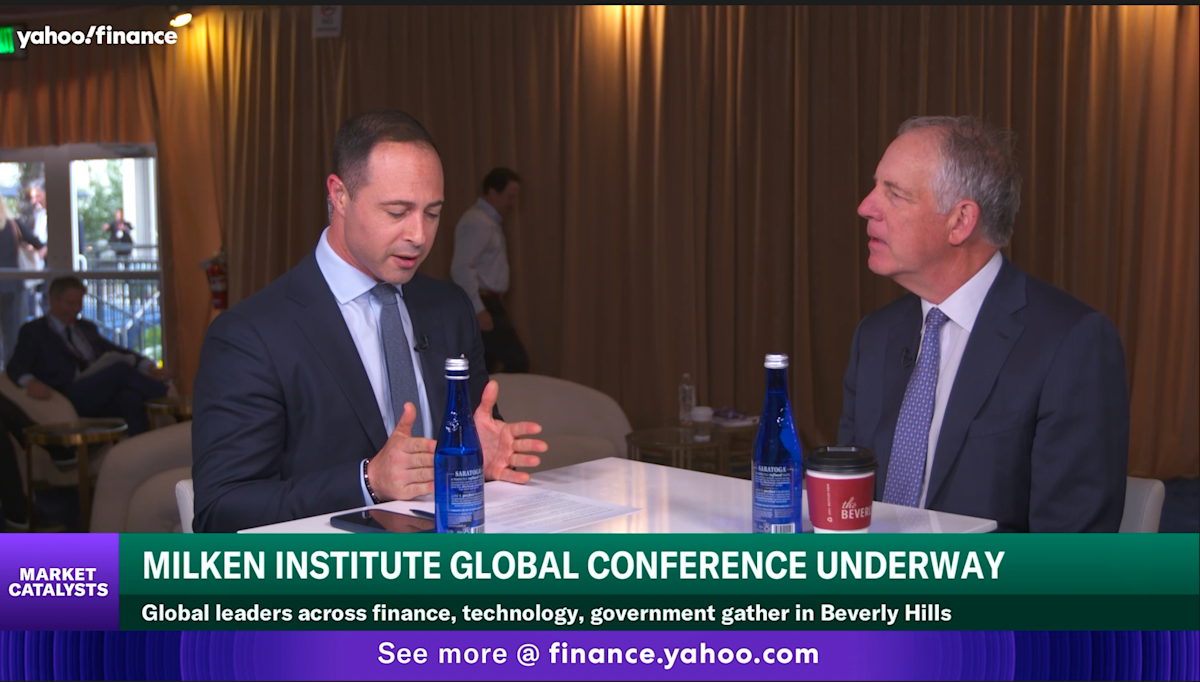
Jim Zelter, president of Apollo Global Management, has expressed optimism about debt financing for AI-related capital expenditures, anticipating robust activity at least through 2028. At the recent Milken Institute conference, Zelter discussed the net origination of investment-grade debt for this year, predicting it will exceed $1 trillion—outpacing net issuance relative to the US Treasury market.
According to Zelter, a significant portion of the $800 billion earmarked for hyperscaler capital expenditures will rely on the operational cash flows of leading tech companies. He emphasised that hundreds of billions would be funded through the public investment-grade markets, while private investment-grade capital would also play a critical role in diversifying funding sources.
Zelter highlighted the need for comprehensive funding mechanisms to achieve these investment goals, indicating that success will require contributions from the equity market, operational cash flow, and both public and private investment-grade markets.
Anticipated Growth in Hyperscaler Capital Expenditures
Goldman Sachs strategists have noted a nearly $80 billion increase in consensus estimates for hyperscaler capital expenditures in 2026. This year is anticipated to mark a significant upward shift, with projections indicating that the five largest hyperscalers—Amazon, Google, Meta, Microsoft, and Oracle—are set to invest a remarkable $751 billion in capex. This figure demonstrates an impressive growth of 83% compared to projected spending in 2025.
To put this into perspective, initial estimates at the start of the current earnings season were around $673 billion, which themselves were revised up from earlier expectations of $546 billion for 2026.
Recent Debt Financing Developments
Notably, Oracle has taken steps to raise between $45 billion to $50 billion through a combination of a one-off bond issuance and an "at-the-market" equity programme aimed at bolstering its cloud infrastructure, which supports clients like Nvidia and OpenAI. Similarly, Meta executed a $25 billion bond sale in May to fund its Louisiana data centre, alongside broader AI initiatives. Alphabet has also entered the debt markets, issuing $31.1 billion in senior unsecured notes in the first quarter of the year.
This trend reflects a significant shift in how major technology companies are financing their AI developments, moving away from reliance solely on cash flow to longer-term debt financing.
Market Sentiment and Implications
While equity investors have shown concern regarding the heavy investments these hyperscalers are directing towards AI infrastructure, it appears that the debt markets remain confident. They continue to provide necessary funding at reasonable interest rates, which is a positive indicator for the financial health of these ventures.
Such stability in the debt market is crucial, especially as the technology sector navigates investor apprehension and volatility. The ability of these tech giants to attract debt financing without excessively jittering the market is vital for their ongoing expansion into AI and cloud solutions.
In conclusion, as we look towards the future, the interplay of diverse funding sources is set to shape the technology landscape, particularly regarding AI investments, suggesting a fruitful era for both established companies and potential new entrants in the sector.