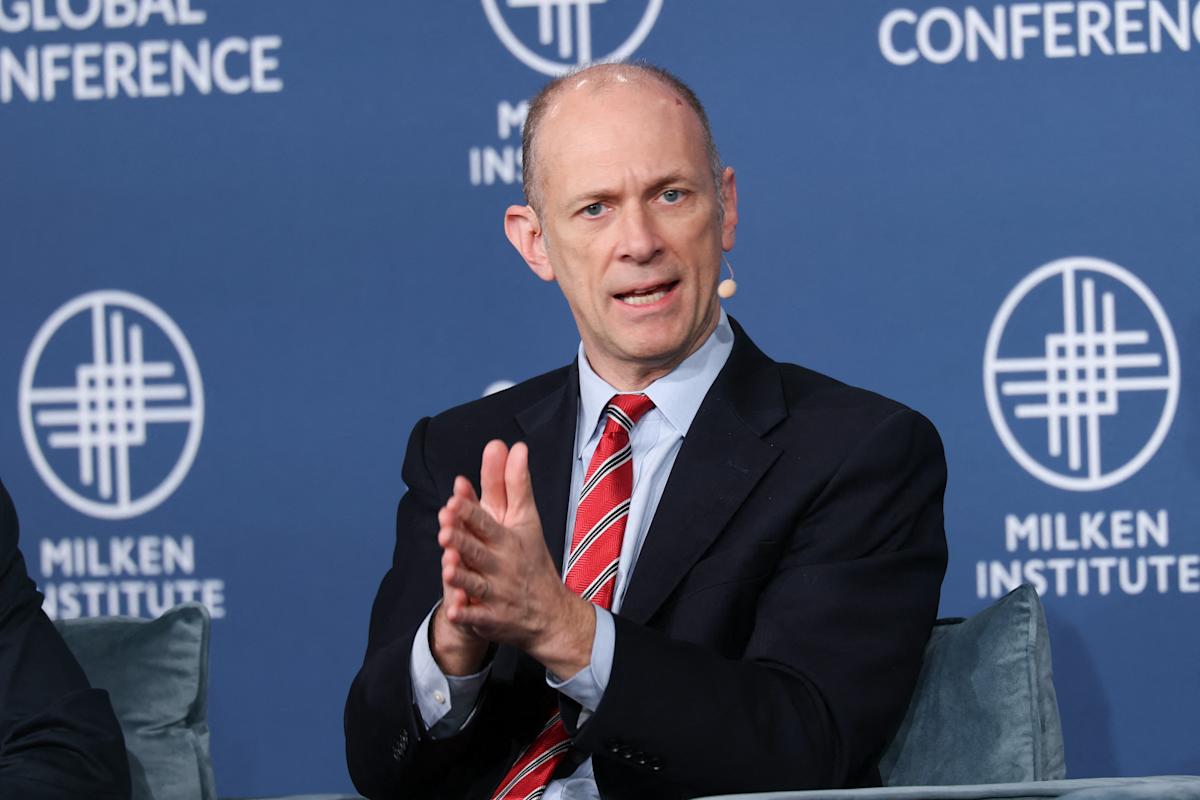
Austan Goolsbee, the President of the Chicago Federal Reserve, recently expressed caution regarding the anticipated economic boom driven by artificial intelligence (AI). Speaking at the Milken Institute conference, he highlighted the potential risk of an overheated economy if significant business investment and consumer spending occur before productivity gains become evident. Goolsbee suggested that, contrary to what some may expect, the Federal Reserve might need to increase interest rates rather than lower them in this scenario.
He noted that while AI has the capacity to greatly enhance wealth, the actual benefits may take time to materialise. This delay calls for a cautious approach from both the Fed and investors as they navigate the economic landscape. The ongoing discussions about productivity growth and its sustainability are paramount among central bank officials and financial markets.
The lessons drawn from the 1990s indicate that advancements in productivity can lead to reduced interest rates by lowering inflation levels. Incoming Fed Chair Kevin Warsh has claimed that AI could significantly improve productivity, hence driving down inflation and allowing the Fed to adjust rates accordingly.
Cathie Wood, CEO of Ark Invest, echoed similar sentiments, predicting that AI could propel real GDP growth by 8% over the long term, stemming from its productivity-enhancing capabilities, which she believes will create substantial deflationary pressures on the economy.
However, Goolsbee raised an important question about whether such growth is based on existing technological advancements or if it is merely an extrapolation of recent trends. He warned that excessive reliance on projections might lead to diminishing returns, referencing the topic of autonomous vehicles. Predictions about the rapid adoption of self-driving cars did not materialise as swiftly as anticipated; thus, Goolsbee cautioned about how much of the gains associated with AI and data centres will face similar limitations.
The economic discourse relies heavily on whether productivity growth is seen as unexpected or anticipated. Goolsbee recalled the mid-1990s, when the Fed expected productivity improvements that had not yet appeared in statistical data. If consumers and businesses embrace the notion of future productivity growth, this expectation could skew their current behaviours, complicating the interest rate landscape.
According to Goolsbee, heightened optimism around productivity could necessitate pre-emptive interest rate hikes to avoid economic overheating. He suggested that the intensity of public enthusiasm surrounding AI advancements could directly influence future monetary policy.
The central theme of Goolsbee’s remarks urges close monitoring of productivity forecasts and general expectations, as these factors will significantly inform the Fed’s policy direction going forward. As the anticipation of AI driving economic growth rises, so does the responsibility to ensure that related investments are aligned with genuine productivity enhancements to avoid potential fiscal missteps.