Bond Market Pressures Federal Reserve as Inflation and Economic Data Shift
The bond market is once again signalling to the Federal Reserve (Fed) that current interest rates may be insufficient. The 2-year Treasury yield, seen as a strong indicator of the Fed’s interest rate policy, has climbed to 4.1%, surpassing the upper limit of the Fed’s target range of 3.50%-3.75%. Concurrently, the yield on the 10-year Treasury approached 4.7% before retracting midweek, indicating rising inflation expectations among investors.
Ed Yardeni, a noted economist, suggests that "Bond Vigilantes," those who actively trade based on bond yields and economic conditions, are warning the Fed that if credit conditions are not tightened, they will enforce this change themselves to maintain economic stability.
Recent data reveals that inflation is on the rise, particularly influenced by geopolitical instability in the Middle East, while various economic indicators demonstrate resilience against escalating oil prices. For instance, wholesale prices surged by 6% in April, mainly due to increased energy costs, with consumer price reports indicating a broader inflationary trend as higher costs are passed down to consumers.
Employment numbers also reflect a mixed economic landscape; payroll growth saw an addition of 115,000 jobs in April, and revisions pushed March’s job growth up to 185,000, marking a recovery from earlier job losses this year. Retail sales data is optimistic, with the Redbook same-store sales index increasing by 8.9%, building on the previous week’s notable rise of 9.6%, significantly exceeding the average annual growth rate of 5.8%.
Major retailers like Home Depot reported strong same-store sales alongside substantial big-ticket purchases. They noted that while customers appear to be in reasonable financial condition, uncertainty is restraining them from engaging in larger projects. Similarly, Target’s recent earnings surpassed expectations, further indicating solid consumer spending.
In response to these evolving dynamics, market expectations regarding interest rates are shifting. The likelihood of rate cuts has diminished, with financial markets now anticipating the Fed will maintain current rates or possibly implement modest increases in the near future. As of now, there is a 41% probability of a rate hike by December, an increase from 30% just a week prior, while October’s odds stand at 35%.
Philadelphia Fed President Anna Paulson conveyed her alignment with market reactions to economic news, stressing that inflation remains elevated, even prior to the recent spike in oil prices. She emphasised that maintaining steady rates for an extended period may be necessary, with further tightening contingent upon inflation trends showing improvement.
Powell’s recent remarks reflected a more neutral stance of the committee, moving away from prior biases favouring rate cuts. This sentiment was reinforced by minutes from the Fed’s April policy meeting, which indicated that while some members considered the possibility of lowering rates upon confirming that inflation was stabilising, a majority favoured rate hikes if inflation persistently exceeded the Fed’s 2% target.
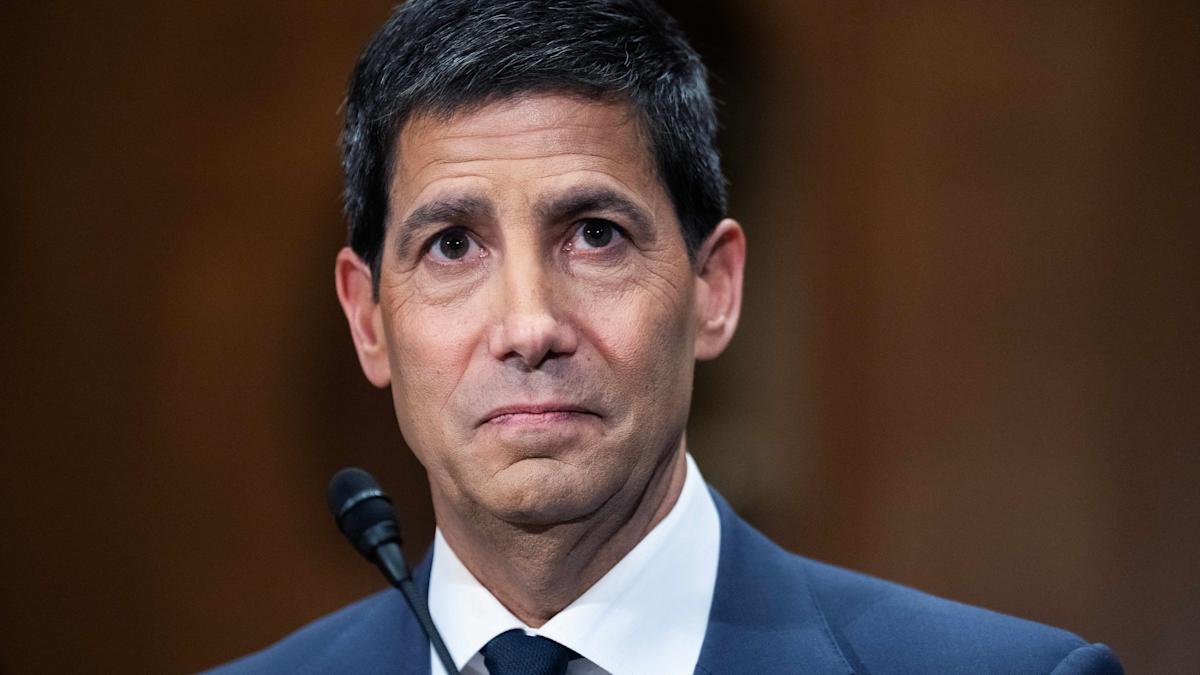
Looking ahead, incoming Fed Chair Kevin Warsh will navigate these economic pressures, especially considering his past advocacy for rate cuts due to the perceived benefits of AI-driven productivity. Former President Trump, who has urged for lower rates, remarked that he would allow Warsh the autonomy to act in his best judgement.
Analysts suggest that the timing for potential rate hikes will heavily depend on the resolution of the conflict in the Middle East and the trajectory of oil prices. Wil Stith, a senior bond manager at Wilmington Trust, noted that if oil prices continue to rise and permeate the economy, it would likely compel the Fed to intervene to manage inflationary pressures.
In summary, the current landscape reflects a tug-of-war between rising bond yields, inflationary pressures, and inconsistent employment data. As the Fed reassesses its strategy, all eyes will be on how it balances these factors in the context of broader economic stability. The prevailing notion is that the economic indicators in the coming months will play a critical role in shaping the Fed’s policy decisions.