Federal Reserve Officials Dissented Over Rate Cuts Amid Economic Uncertainty
In a recent Federal Open Market Committee (FOMC) meeting held on April 29, three Federal Reserve officials voiced their dissent regarding the central bank’s apparent inclination towards reducing interest rates. The policy statement released after the meeting indicated that the committee would assess the "extent and timing of additional adjustments" to the federal funds rate. This phrase, while not a definitive commitment to rate cuts, has been widely interpreted by analysts to suggest that a reduction is the committee’s expectation.
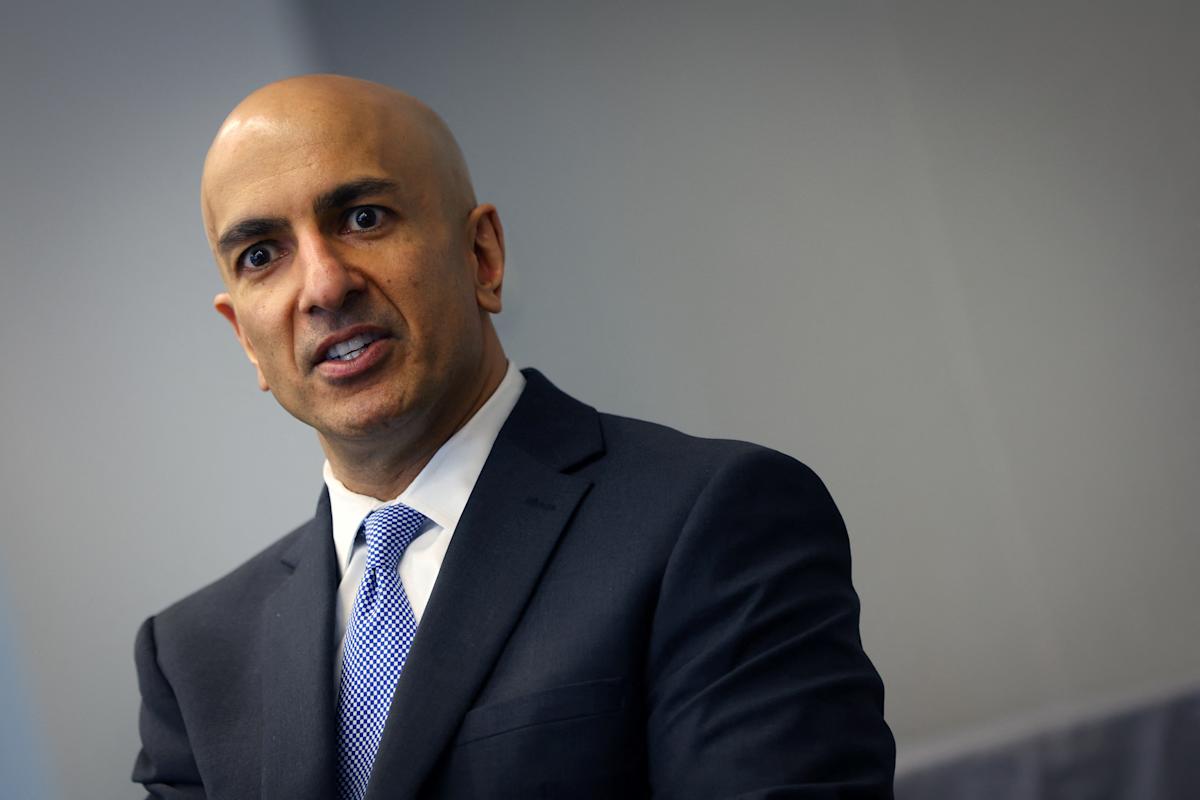
Minneapolis Fed President Neel Kashkari, along with Cleveland Fed President Beth Hammack and Dallas Fed President Lorie Logan, voiced their support for maintaining steady interest rates but disagreed with the easing stance reflected in the policy statement. Kashkari argued that the FOMC’s language regarding potential rate adjustments no longer aligns with the current economic climate, particularly in light of the ongoing conflict in the Middle East. He proposed that the FOMC should communicate a policy outlook that allows for either a rate hike or cut, dependent on economic developments.
Hammack referred to the phrasing in the policy document as a "clear easing bias," noting that it suggests a cessation rather than an end to the easing cycle. She expressed concern that this stance is inappropriate given the economic outlook. Logan echoed similar sentiments, emphasising that forward guidance should accurately reflect the policy landscape. She suggested that the committee should refrain from indicating any bias towards rate cuts due to the two-sided risks currently present in monetary policy.
In a rare occurrence, Fed governor Stephen Miran also dissented but did so with a different argument, advocating for a quarter-point reduction to the benchmark rate. The last time the Fed encountered such a level of dissent in a policy vote was over thirty years ago.
Attention Turned to Inflation
Before the conflation in the Middle East, Kashkari had anticipated that inflation was too high but expected it to decrease as tariffs filtered through the supply chain. However, he now believes that in light of the prevailing uncertainty, the Fed’s communication should reflect that future adjustments could go either way based on economic developments.
Kashkari outlined two potential scenarios concerning the conflict’s impact on oil prices and inflation. The first scenario is optimistic, predicting that if the Strait of Hormuz reopens quickly, oil prices could decline to around $88 a barrel by year-end. Despite this, inflation is still projected to average 3% throughout the year, meaning that rates would likely remain stable for an extended duration before witnessing gradual cuts post-inflation shock.
Conversely, the second scenario foresees a prolonged closure of the Strait, exacerbating inflation and unemployment as oil prices soar. In such a case, he argues that significant policy measures, including rate hikes, would be necessary, even if it posed risks to the labour market.
Hammack underscored the persistent inflation pressures across various sectors, noting a recent rise in the Personal Consumption Expenditures index to 3.5% in March. The price of oil also surged, hitting $122 a barrel, pushing consumer costs upward. Despite the resilient nature of the economy thus far, with unemployment stable at 4.3%, she expressed concerns over the balance between inflationary and growth pressures.
Logan expressed apprehension regarding the timeframe for bringing inflation back down to the Fed’s 2% target, considering that it has stayed above this threshold for over five years. The potential for supply disruptions due to the ongoing conflict poses further inflation risks, complicating the monetary policy landscape.
As the situation develops, the Fed officials continue to assess economic indicators closely, recognising the intricate balance required in guiding future rate decisions.