The ongoing military engagement between the US and Israel in Iran has led to complex repercussions that are straining international relations, especially between the US and its European allies. Analysts suggest this shift could alter the power dynamics with China, the world’s second-largest economy.
Recent comments from President Trump have sparked concerns about US commitments to its allies, with Europe being particularly vulnerable due to its heavy dependence on energy supplies from the Persian Gulf. Trump has criticised Europe, labelling it a “paper tiger,” and urged EU nations to take bolder diplomatic actions in the region. These statements, coupled with other contentious international gestures, have raised doubts about American reliability among its partners, potentially creating openings for China to expand its influence.
Henrietta Levin from the Center for Strategic and International Studies highlighted that doubts surrounding the US’s commitment to European allies could also affect deterrence in Asia, making the geopolitical landscape increasingly precarious. This distraction may allow China to broaden its strategic activities in the Indo-Pacific region, particularly concerning Taiwan, a crucial area for US economic and security interests due to its semiconductor manufacturing capabilities.
While experts believe that China won’t take immediate military action regarding Taiwan based on the US’s turmoil in the Middle East, some suggest it could create room for China to extend its reach without facing American opposition. In recent days, Chinese ships have been seen moving to assert control over the Scarborough Shoal in the South China Sea, a location that has been a flashpoint of regional tensions.
Despite being better insulated from global oil shocks due to extensive domestic policy shifts toward renewable energy and oil stockpiling, China still relies on the Persian Gulf for a significant portion of its oil imports. A disruption in this supply could strain its refining capabilities. Reports indicate that the US Navy’s actions in the Strait of Hormuz may already have impacted Chinese vessels attempting to navigate this strategic waterway.
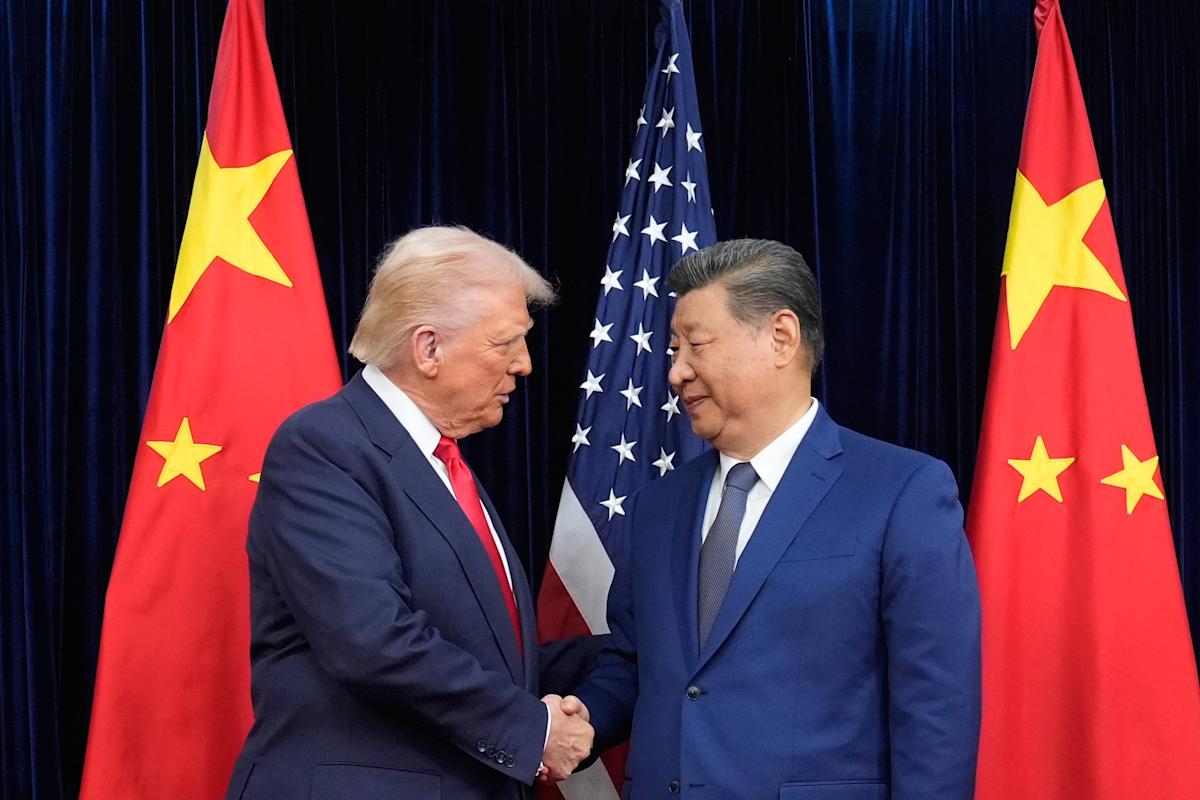
With a pivotal meeting on the horizon between Trump and Chinese President Xi Jinping planned for May, the evolving geopolitical context could play a significant role in the discussions. Experts anticipate that both leaders will seek to maintain stability in their relationship, focusing on trade issues, including the future of semiconductor exports to China.
This summit may also be marked by potential shifts in US-Taiwan relations, particularly concerning arms sales, which could signal a change in the US stance towards Beijing and Taipei. Trump expressed confidence in the upcoming meeting, hinting at a cooperative rather than confrontational approach with China.
In summary, the instability stemming from US military engagements in the Middle East has the potential to reshape global power dynamics, particularly regarding perceptions of American commitment to its allies and the strategic maneuvers of China in the Indo-Pacific. The upcoming summit between Trump and Xi could further clarify the direction of these relationships amid the ongoing geopolitical complexities.