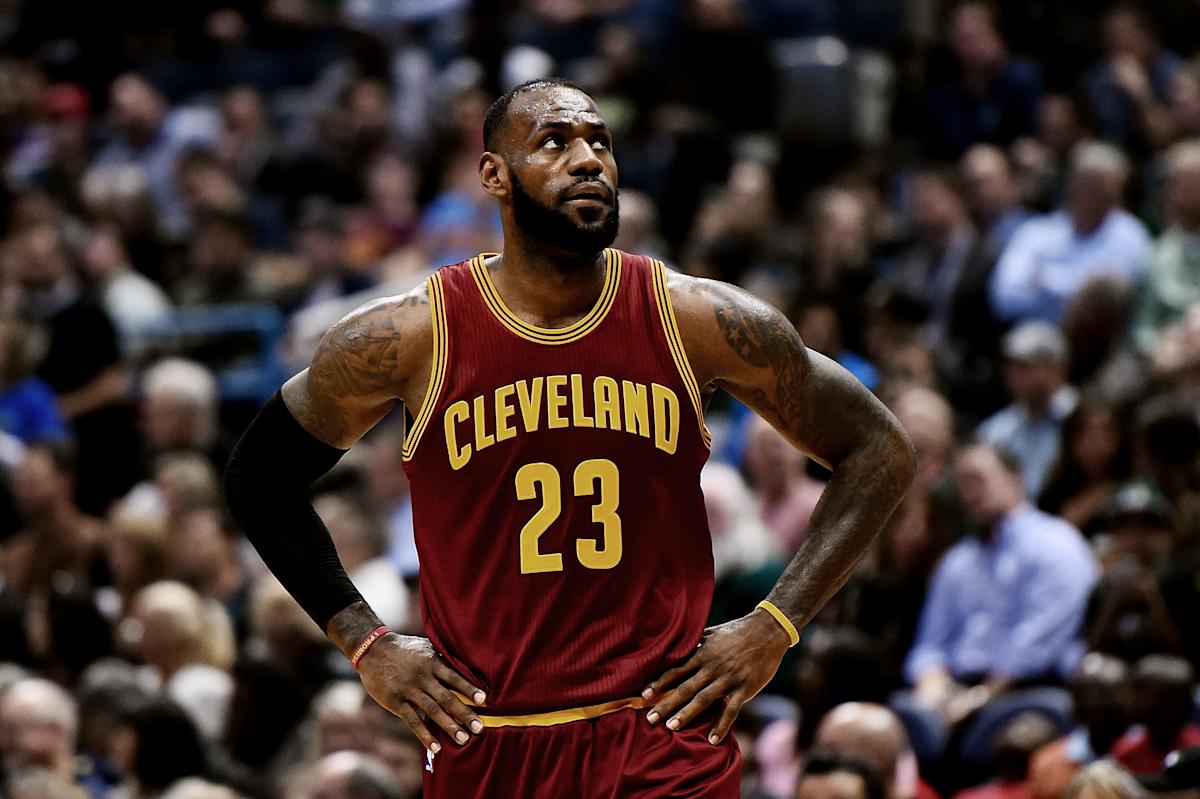
In September 2014, LeBron James made headlines by rejoining the Cleveland Cavaliers after a successful four-year period with the Miami Heat. At that time, Nike (NKE) shares dropped to a closing price of $39.88—marking a significant low for the company. Fast forward to today, and Nike’s stock is once again approaching these precarious levels.
Recently, Nike’s shares fell below their 52-week low of $42.09, a threshold initially set on April 13. Year-to-date, the stock has plummeted by 34%, contrasting sharply with the S&P 500’s approximate 10% gain over the same period. This decline is particularly stark compared to Nike’s all-time high of $177.51 on November 5, 2021, representing a staggering drop of over 75% from that peak.
In the last five years, Nike’s stock performance reflects an alarming -69% return, indicating substantial losses for investors who purchased shares during this timeframe. The backdrop for this turmoil is further complicated by the fact that LeBron James is reportedly contemplating a return to the Cavaliers, a narrative that entwines the sports and business stories of Nike.
### Market Overview
Nike’s latest earnings report shed light on various challenges the company faces. The results revealed a concerning landscape as intensified competition from brands like Adidas and emerging companies such as On Holding continues to pressure market share. Furthermore, Nike has been grappling with declining sales in the critically important Chinese market, where sales have dipped by 10% compared to the previous year. Online sales have suffered even more, experiencing a 21% drop, while wholesale business has decreased by 13%.
Management issued guidance indicating a potential revenue decrease of 2% to 4% for the current fiscal quarter, with expected declines in gross profit margins as well. Analyst Paul Lejuez from Citi has estimated that these projections imply a fourth-quarter earnings per share figure between $0.05 and $0.15, falling short of the consensus forecast of $0.20 at that time. This projected performance fuels concerns about Nike’s near-term outlook, with Evercore ISI analyst Michael Binetti noting the difficulty in anticipating a revenue recovery before early 2027.
### Leadership and Future Directions
The current situation presents a challenging scenario for Nike’s CEO, Elliott Hill, who has been at the forefront of efforts to turn the company around. Despite Hill’s extensive experience and reputation within Nike, the stock performance is disheartening, particularly for an established icon in the industry. Although Hill has engaged with the media to promote optimism surrounding his strategies, the charm offensive has yet to yield desired results.
When Hill became CEO in October 2024, he was hailed by investors as a key figure capable of revitalising Nike’s fortunes. However, competitive pressures, escalating costs, and a restructuring initiative designed to streamline operations have hampered progress. There are rising questions about how much longer Hill will remain in charge, especially given the influence of the original founders on the board.
Intriguingly, another influential board member, Tim Cook—CEO of Apple—is anticipated to have more availability to engage in Nike’s affairs after he transitions leadership later this year, adding another layer of intrigue to Nike’s governance and future strategies.
### Conclusion
Nike’s struggles illustrate the volatile nature of the stock market and underscore the significant challenges facing even the most established brands. For investors and stakeholders alike, the path to recovery appears fraught with obstacles. The coming months will be crucial in determining whether Elliott Hill’s leadership can reset Nike’s trajectory amidst intensifying competition and shifting market dynamics.