Tesla’s Breakthrough in the Netherlands: An Opportunity for Expanded Self-Driving Rollout in Europe
Tesla (TSLA) has achieved a significant milestone in its journey towards expanding its Full Self-Driving (FSD) software, as the Netherlands has become the first country in the European Union to grant approval for the technology. This landmark decision could pave the way for Tesla to accelerate the deployment of its FSD across Europe, offering a vital growth opportunity for the company.
In an announcement shared on X (formerly Twitter), Tesla confirmed that "FSD Supervised has been approved in the Netherlands and will begin rolling out within the country shortly." This news was first reported by Reuters, and the Dutch motor authority, RDW, has also validated the approval. They confirmed that the FSD system underwent rigorous testing and assessments over more than 18 months on various test tracks and public roads.
Notably, the RDW indicated that Tesla is not the first manufacturer to secure this type of approval; other carmakers, including BMW and Ford, have received similar endorsements for their supervised self-driving technologies.
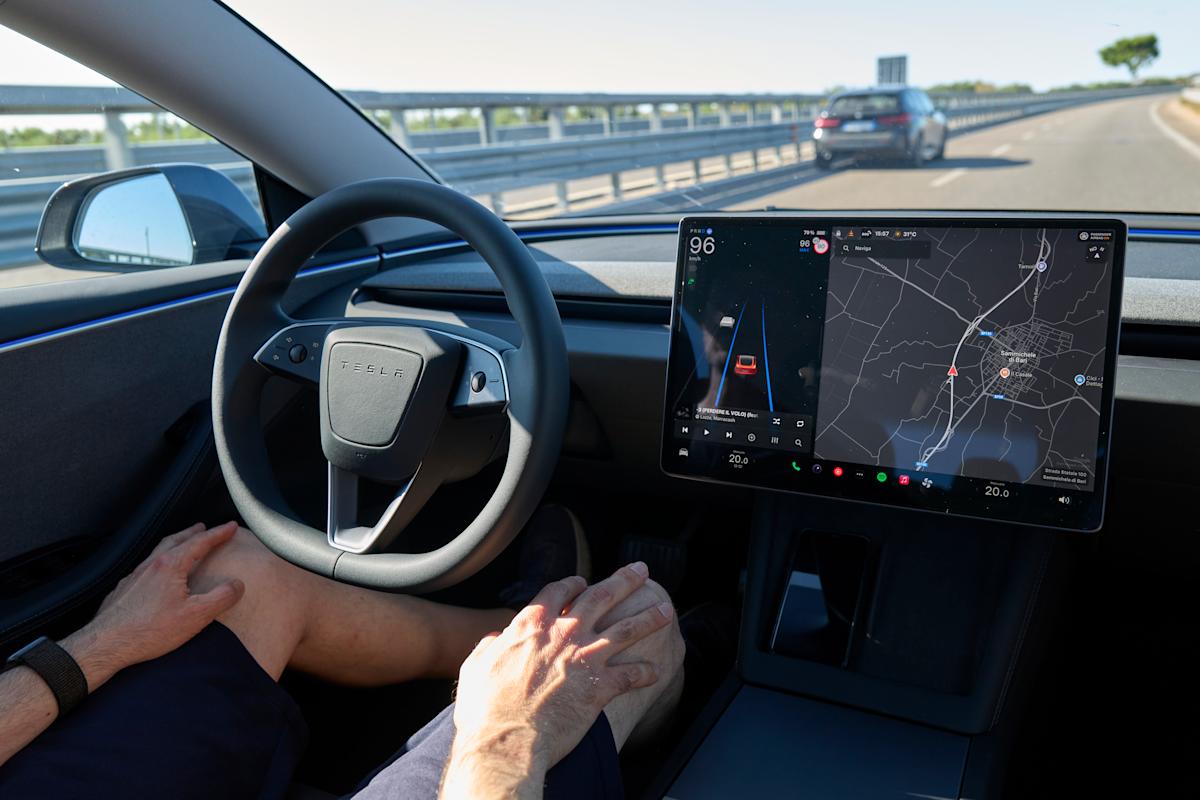
Under this new framework, Tesla drivers in the Netherlands will be able to disengage from the steering wheel under suitable circumstances. However, drivers must remain vigilant and prepared to take control at any moment, with specific prohibitions against phone use or reading while FSD is active.
For those interested in using FSD Supervised, the service is priced at €99 per month, mirroring the subscription rates in the United States, or can be purchased outright for €7,500. However, in the US, Tesla has shifted to a subscription-only model for FSD, eliminating the outright purchase option for consumers.
The approval in the Netherlands is anticipated to facilitate a broader rollout across Europe, although the path forward may encounter some hurdles. The RDW has the option to submit a proposal for EU-wide approval through the European Commission; however, this would require a vote from all member states, necessitating a majority consensus for approval.
This positive development in the Netherlands serves as a substantial boost to Tesla’s ambitions for expanding its autonomous driving capabilities beyond the American market, aligning with an increasingly optimistic outlook from Wall Street regarding the company’s trajectory in self-driving technology.
Recently, Bank of America analyst Alexander Perry reinstated a "Buy" rating on Tesla, setting a price target of $460. Perry identified Tesla as the leader in consumer autonomy, predicting that the company would swiftly emerge as a frontrunner in the robotaxi segment, primarily due to its scalable and profitable business model compared to competitors.
A significant aspect of Perry’s bullish outlook is Tesla’s cost advantage in developing autonomous vehicles. Whereas competitors such as Waymo utilise complex and expensive LiDAR systems—estimated to cost about $150,000 to build per robotaxi—Tesla’s deployment of a vision-only approach significantly reduces the cost to around $40,000 for a Model Y.
In conclusion, Tesla’s recent approval in the Netherlands not only marks a crucial achievement for the company’s self-driving initiative but also sets the stage for potential growth in the European market. As global interest in autonomous vehicles rises, Tesla seems poised to be at the forefront of this transformative shift in mobility.