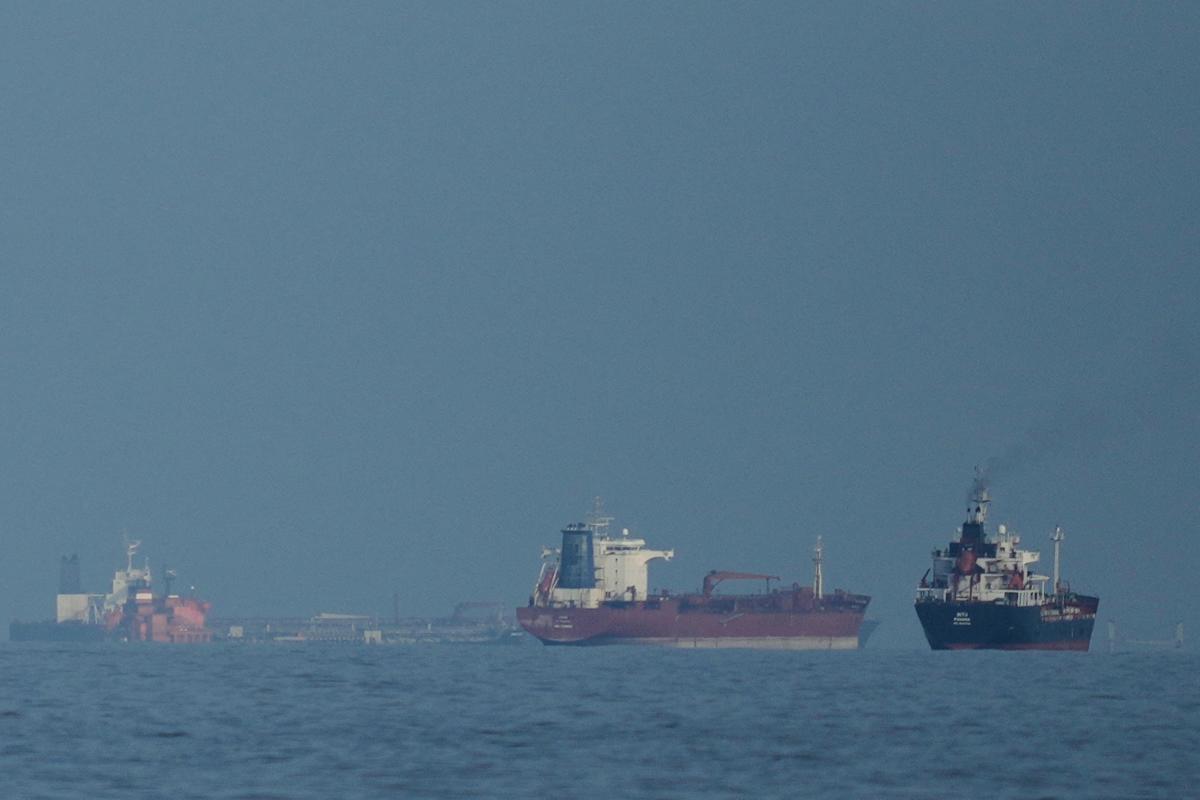
US-Iran Tensions Escalate with Blockade in the Strait of Hormuz
President Trump recently intensified tensions in the Strait of Hormuz, issuing a stern warning regarding Iranian naval activity shortly before a planned US blockade was to take effect. In a morning social media update, Trump declared that Iran’s navy has been “completely obliterated,” claiming that 158 Iranian ships now rest at the sea’s bottom.
Despite this aggressive rhetoric, Trump remarked that the US has chosen not to target certain “fast attack ships,” as they pose minimal threat. He cautioned, however, that any Iranian vessel approaching the US blockade would face immediate elimination, likening the response to that used against drug traffickers at sea.
The blockade, announced by Trump over the weekend, commenced at 10 a.m. ET on Monday and aims to restrict all vessels in and out of the vital waterway. This strategic move seeks to hinder Iran’s oil export capabilities and diminish its influence in the region, particularly after negotiations aimed at peace have faltered.
During a press conference at the White House, Trump stated that Iranian officials had reached out earlier that day, expressing interest in negotiating a deal.
As geopolitical tensions rose, the oil market reacted, with West Texas Intermediate crude futures increasing by over 1%, lingering below $98 per barrel, while Brent crude also saw a similar rise, trading just above the $98 mark. This surge comes as nations reliant on oil have been grappling with supply disruptions since the outbreak of conflict in Iran at the end of February.
JPMorgan analysts noted a concerning pattern of supply shortages leading to significant reductions in inventories and what they termed “involuntary demand destruction,” indicating that acquiring fuel has become increasingly challenging.
In their report, JPMorgan’s Natasha Kaneva indicated that signs of strain are becoming evident within the oil supply system. Last Friday, Brent crude was quoted at $126 per barrel, following a peak of $144 earlier in the month.
Fuel market expert Tom Kloza remarked to Yahoo Finance that current futures pricing does not accurately reflect the high costs for immediate oil availability. Historically, the gap between physical market prices and Brent futures has been relatively narrow, usually around $1 to $2 per barrel. However, Kloza highlighted that if purchasers, including refiners, seek crude oil that is ready for immediate use, they are paying significantly higher prices than those suggested by futures contracts.
In summary, the strategic dynamics surrounding the Strait of Hormuz have escalated, with President Trump asserting a blockade and issuing threats towards Iranian naval forces. This situation has sparked noticeable fluctuations in the oil market, leading to concerns over supply availability and price disparities.