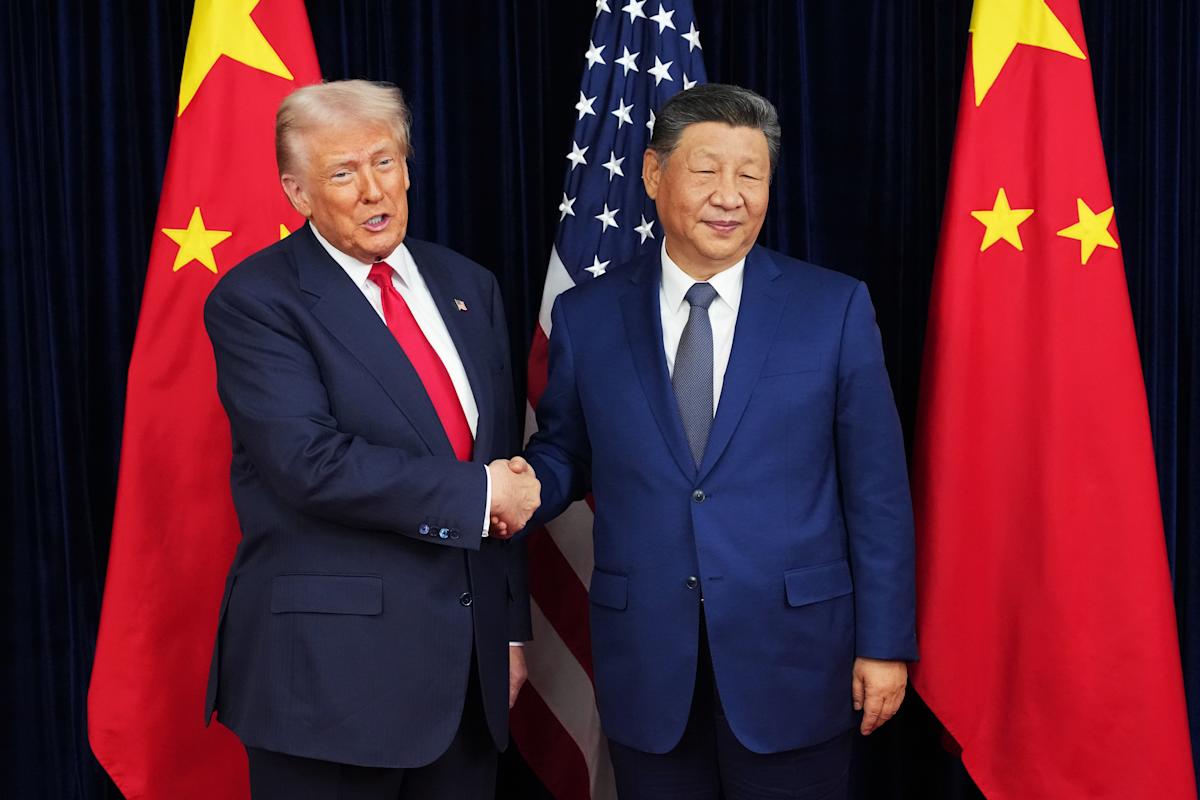
Summary of President Trump’s Visit to China: Progress Amidst Challenges
President Donald Trump’s highly anticipated trip to China is poised to make incremental advancements on several key issues such as tariffs, artificial intelligence (AI), and China’s involvement in the Iran conflict. However, both the White House and external analysts suggest that significant breakthroughs are unlikely to emerge from this meeting.
Michael Froman, president of the Council on Foreign Relations, described the current US-China strategy as one that prioritises "not fighting" rather than resolving outstanding issues. This approach indicates a shift in policy dynamics as both nations navigate their complicated relationship.
A critical focus of the visit is anticipated to be new trade agreements, particularly in the aerospace sector, with executives from Boeing expected to engage in discussions regarding additional Chinese aircraft purchases. Furthermore, the establishment of the US-China Board of Trade and the US-China Board of Investment aims to enhance discussions on trade and investment, especially in the rapidly evolving AI landscape, where there is growing rivalry between the two countries.
A senior official highlighted the importance of these potential AI discussions, proposing them as a way to establish “channels of de-confliction” to address concerns over cyber-espionage tied to advanced AI technologies. Trump’s meeting with Chinese President Xi Jinping will be the first in over six months, and there are low expectations for groundbreaking outcomes.
The itinerary for Trump’s visit includes formal ceremonies and discussions with Xi, followed by a working lunch. In addition, Treasury Secretary Scott Bessent is participating in preliminary talks with China’s top trade official to pave the way for Trump’s discussions.
Ongoing Iran Tensions and Uncertainty on Tariffs
The context of Trump’s visit has been influenced by heightened tensions over the ongoing conflict in Iran, which resulted in a delay of the originally scheduled trip. China’s disregard for US sanctions relating to Iranian oil has raised concerns, especially after recent sanctions were placed on Chinese companies accused of aiding Iran with satellite imagery for airstrikes. Trump is expected to address China’s financial support for Iran during private discussions, although he has publicly framed the trip as one aimed at fostering friendship.
Another complexity arises from a recent ruling by the Court of International Trade, which could undermine Trump’s authority to impose a 10% global tariff on goods, introducing fresh uncertainty into trade negotiations ahead of the meeting. Analysts believe that the weakening of the president’s tariff leverage could escalate tensions further.
While a detailed trade board is likely to be a tangible outcome from the trip, it is acknowledged that its implementation will require further action from both the US and China post-summit. A US official commented that the real work associated with establishing this board would occur after the president returns home.
Emphasis on Artificial Intelligence
Throughout the visit, a strong emphasis is likely to be placed on the topic of AI, particularly the potential for official dialogues focused on creating guardrails to mitigate escalating AI competition. A senior US technology official has accused China of conducting extensive efforts to illicitly acquire US technology, adding urgency to discussions about safeguarding national security.
While there is cautious optimism about the discussions surrounding AI, a US official noted that due to China’s past broken promises with respect to cybersecurity agreements, confidence in achieving enforceable agreements is low. However, establishing formal communication channels could represent a crucial step toward addressing the significant and escalating concerns related to AI.
In conclusion, while Trump’s visit to China may not yield transformative agreements, there is potential for meaningful dialogue around trade and AI that could help stabilise the relationship between the two nations during a time of increasing complexity and uncertainty.