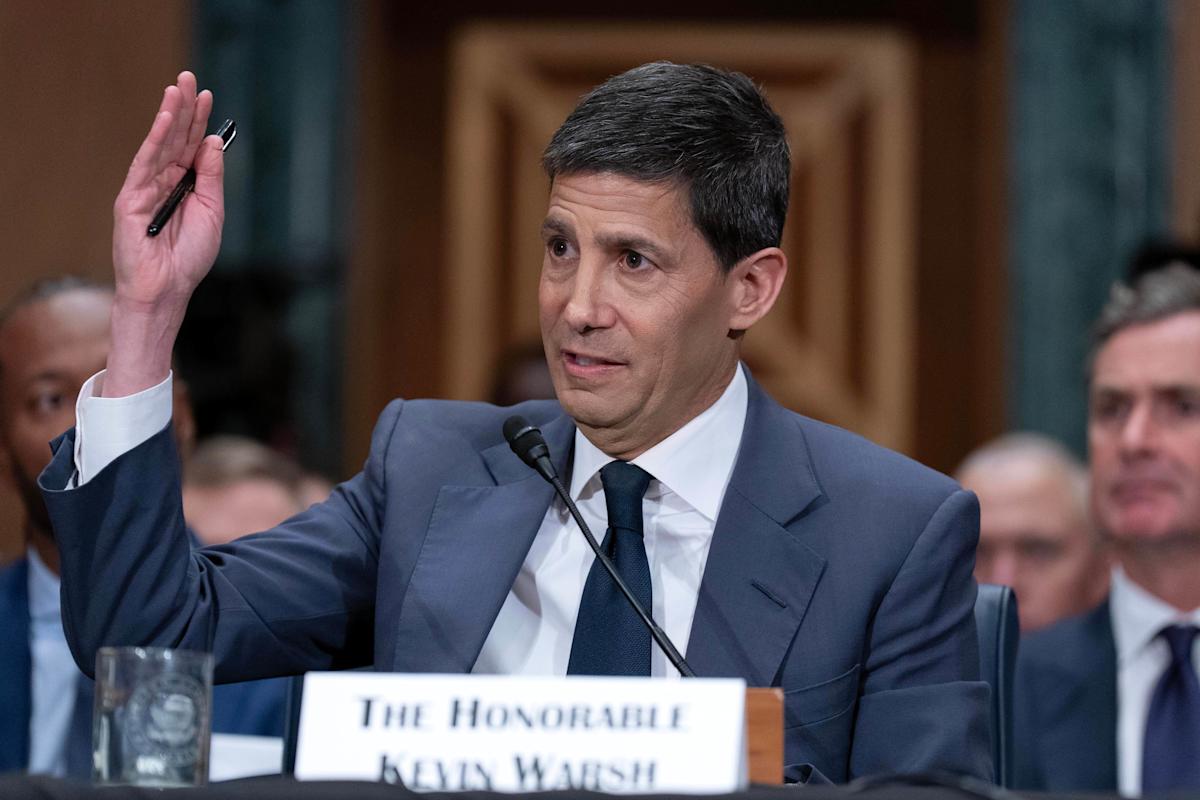
Kevin Warsh Advocates for a Shift in Federal Reserve Communication Strategies
During his recent confirmation hearing, Kevin Warsh, a nominee to become the next chair of the Federal Reserve under President Trump, expressed his intentions to reduce the frequency of communications from Federal Reserve officials. He argued that both the chair and other members of the Federal Open Market Committee (FOMC) should speak less often and refrain from providing guidance regarding future policies before interest rate meetings. Notably, Warsh did not commit to maintaining the practice of holding press conferences after every policy meeting, a protocol established by the current chair, Jerome Powell, which markets closely monitor.
Warsh suggested that the Federal Reserve should adopt a communication style reminiscent of the era led by former chair Alan Greenspan. Under Greenspan, there were no press conferences or advance signals pertaining to Fed actions—communication was limited to textual statements, leaving investors to decipher the Fed’s intentions.
In his address to the Senate, Warsh remarked, "I would say this, I think truth-seeking is more important than repetition. If one has a press conference, one wants to deliver some important news." Since Greenspan initiated the first post-meeting statement in the mid-1990s, the Fed’s communication strategy has progressively shifted towards greater transparency, particularly intensifying during the global financial crisis when unconventional tools necessitated elaborate explanations.
In 2011, Ben Bernanke began quarterly post-meeting press conferences, which were followed by the 2012 introduction of the dot plot, a graphical representation of interest rate projections, and Jerome Powell’s later move to regular post-meeting conferences in 2019. Matt Luzzetti, chief US economist at Deutsche Bank, forecasts that Warsh’s leadership could signal a transition back to a less transparent communication approach, contrasting the post-financial crisis drive for increasing openness.
Warsh identified that the economy is still experiencing challenges stemming from inflation spikes post-pandemic, significantly due to the reliance on forward guidance. He contended that this had led the Fed to maintain forecasts longer than warranted, thus exacerbating earlier errors from 2021 and 2022. He stated, "The Fed tells the whole world what their dots are going to be, what their forecasts are going to be," adding that waiting until meetings to decide could help avoid compounding past mistakes.
Financial market analysts are cautious about potential shifts in communication dynamics under Warsh. Wilmer Stith from Wilmington Trust indicated that while he does not anticipate Warsh moving away from transparency as much as the market fears, any reduction could induce volatility. "That’s just going to result in potential greater volatility," he remarked about the uncertainty that might stem from a less predictable Fed communication style.
Historically, the practice of transparency may be hard to retract, given the current climate surrounding central bank independence. Former Kansas City Federal Reserve president Esther George pointed out that any attempts by Warsh to alter communication styles would necessitate careful consideration of how various officials interact with their districts. As regional Fed presidents are expected to engage with local constituents, their voices would likely remain active in public dialogue.
Luzzetti highlighted that restricting communication could be misconstrued as an effort to suppress alternative viewpoints, complicating Warsh’s capability to rally the Committee around his proposals. He suggested that if Warsh was perceived as stifling dissent, it could hinder the Committee’s cohesion.
The potential for change in interest rate projection practices remains uncertain, as modifications would require unanimous consent from the FOMC. Powell’s prior attempts in this arena did not resonate successfully, leaving existing protocols intact. George believes the upcoming year should focus on consensus-building, allowing necessary tactics or strategies to evolve organically within the committee framework.
In conclusion, Warsh’s ascent to the Federal Reserve chairmanship promises to initiate a dialogue about communication strategies as the central bank navigates the current economic landscape. His proposals could alter the foundational practices regarding transparency, yet realignment with the needs of the Committee will ultimately determine the pace and extent of any such changes. The challenge lies ahead in fostering agreement among various stakeholders while addressing vital economic issues.
For the latest economic updates and insights, stay informed with our dedicated financial news resources.