Federal Reserve Insights on Economic Risks Amid Middle East Conflict
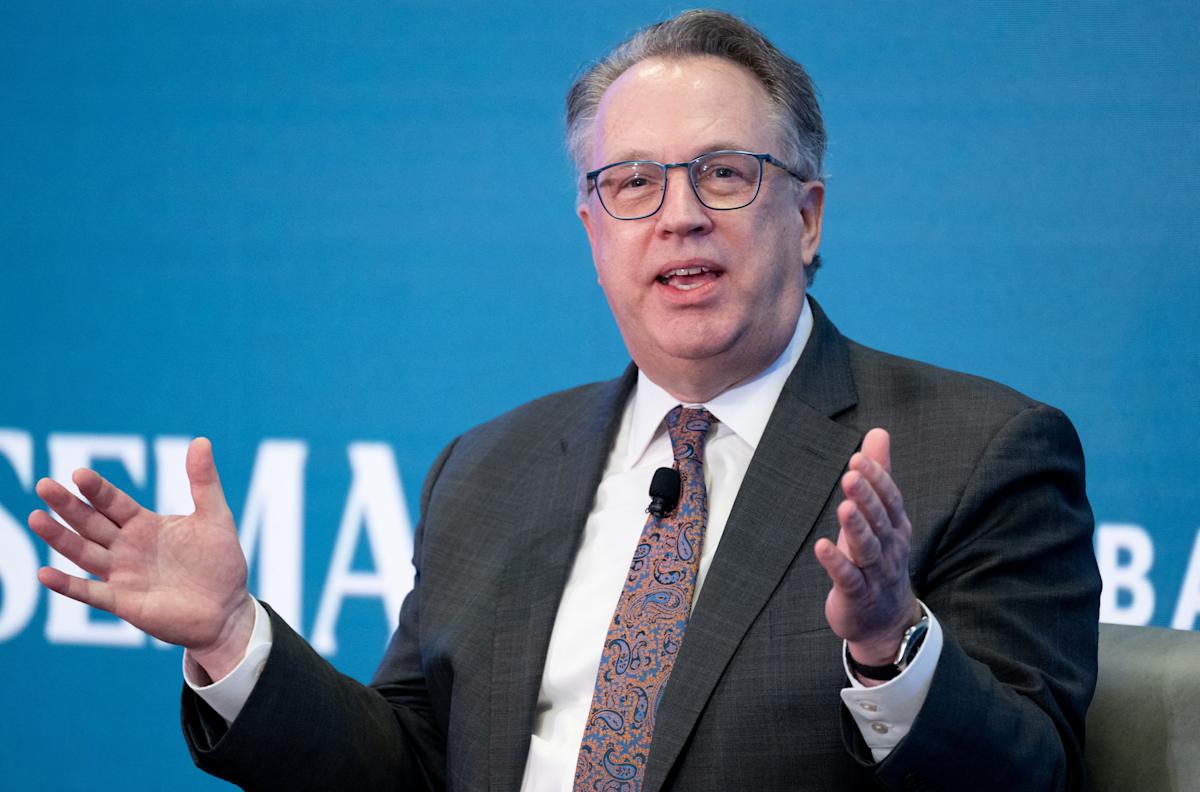
On Monday, John Williams, President of the New York Federal Reserve, addressed the heightened economic uncertainties stemming from the ongoing conflict in the Middle East. He indicated that interest rates are currently “well positioned,” despite the new “significant and unpredictable risks” presented by the situation.
Williams noted that the conflict has already caused “notable” disruptions in global supply chains, reminiscent of the widespread shortages experienced as the world emerged from the pandemic in 2021. He acknowledged, however, that the current job market lacks the robust recovery seen immediately post-pandemic. While input costs are rising, labour costs have not surged similarly, limiting companies’ ability to pass on increased expenses to consumers, thereby preventing a situation similar to the inflation spikes of 2021.
In a speech delivered in New York, Williams elaborated on the challenges facing the economy. He mentioned that elevated inflation levels, mixed signals from the labour market, and increased uncertainty from the conflict all contribute to a complex economic landscape. Despite these challenges, he believes that the current stance of monetary policy is appropriately positioned to balance the risks associated with maximum employment and price stability.
The ongoing war in Iran has notably impacted oil prices, leading to increased costs for fuel as well as transportation, groceries, fertilisers, packaging, and various consumer goods. Williams cautioned that this conflict could trigger significant supply shocks, resulting in widespread implications due to the interconnectedness of the global economy.
Currently, the outlook for the future remains uncertain, with enhanced risks to both inflation and employment being highlighted. Williams attributed a full percentage point of the inflation rate, recorded at 3.5% in March via the Personal Consumption Expenditures price index, to an interplay of rising tariffs and energy prices. He forecasted that inflation is likely to remain above the Federal Reserve’s target of 2% for the upcoming quarters, primarily due to the ramifications of elevated energy prices and tariffs impacting domestic producers and consumers.
Although Williams anticipates that the effects of tariffs will mostly dissipate in the near future, he also warned about the potential for new tariffs, which could exert renewed upward pressure on import prices. He forecasts inflation to hover around 3% for this year, with a gradual reduction towards the 2% target expected next year. Economic growth is projected to remain robust, with estimates between 2% to 2.25% for both this year and the next.
Outside of the energy sector and import prices, Williams stated that inflation has stabilised, with no significant secondary effects from tariffs seen thus far. He expressed confidence that inflation expectations remain well managed.
In conclusion, Williams’ insights underscore the complex interplay of geopolitical tensions and economic indicators, marking a pivotal moment for policymakers as they navigate these turbulent waters. The Federal Reserve’s approach will be crucial in addressing the evolving challenges that lie ahead.