Home Depot (HD) has maintained its outlook for 2026 amidst a challenging housing market and rising economic uncertainties, including soaring gas prices. Home Depot’s CFO, Richard McPhail, noted that homeowners are increasingly engaging in smaller do-it-yourself (DIY) projects rather than larger renovations due to concerns about affordability and fuel costs, which currently hover above $4.50 per gallon. Despite their generally higher incomes and accumulated housing wealth, customers are reporting the financial strain of these rising expenses.
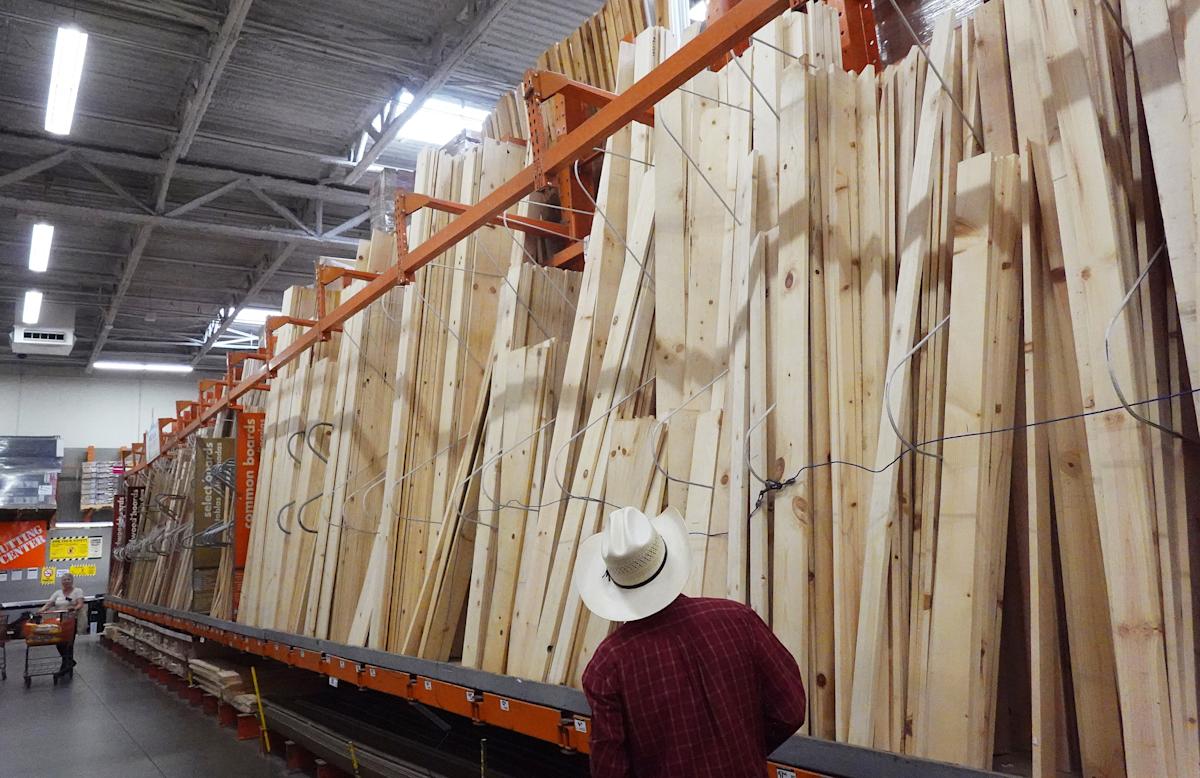
McPhail pointed to the ongoing popularity of small projects like painting, which have remained a significant revenue contributor for the company over recent years. Conversely, larger renovation categories—such as lumber, building materials, and flooring—are experiencing a downturn as consumers defer these more substantial expenditures.
Following the recent earnings release, Home Depot’s stock fell by 2% in early trading, adversely affecting its competitor Lowe’s (LOW), which is set to report its earnings soon. In the company’s first quarter, same-store sales grew by 0.6%, slightly missing analyst expectations of 0.9% growth. Although the average transaction size increased by 2.2%, the overall number of transactions dropped by 1.3%.
High mortgage rates and increasing home values—now averaging around $400,000—have led many consumers to invest in smaller home enhancement projects. McPhail emphasised that while spending on home improvements continues, it is manifested in smaller transaction sizes compared to historical trends.
Notably, Home Depot’s revenue for the first quarter rose approximately 5% year-on-year, reaching $41.8 billion, which surpassed last year’s $41.6 billion. Adjusted earnings also exceeded expectations, coming in at $3.43 per share, against predictions of $3.41. The company’s professional segment performed better than its DIY sector, buoyed by substantial investments post-acquisition of SRS Distribution, costing $18.5 billion.
In addition, Home Depot earlier in the year acquired Mingledorff’s, a prominent distributor of HVAC equipment. Digital sales for the quarter outperformed expectations, increasing by 10% year-over-year. This growth is credited to improvements in online customer experiences, with McPhail noting that advancements in artificial intelligence have enhanced product recommendations and information.
Looking ahead, Home Depot forecasts same-store sales growth to remain flat or rise by up to 2% for 2026, with total sales expected to increase by 2.5% to 4.5%. McPhail expressed that the company is assessing mixed consumer dynamics. He highlighted that while tax refunds and income growth could positively influence sales, rising fuel costs add an element of uncertainty.
In conclusion, while Home Depot is observing a shift in consumer spending patterns towards smaller projects, the company is preparing for various market influences as it looks to the future.