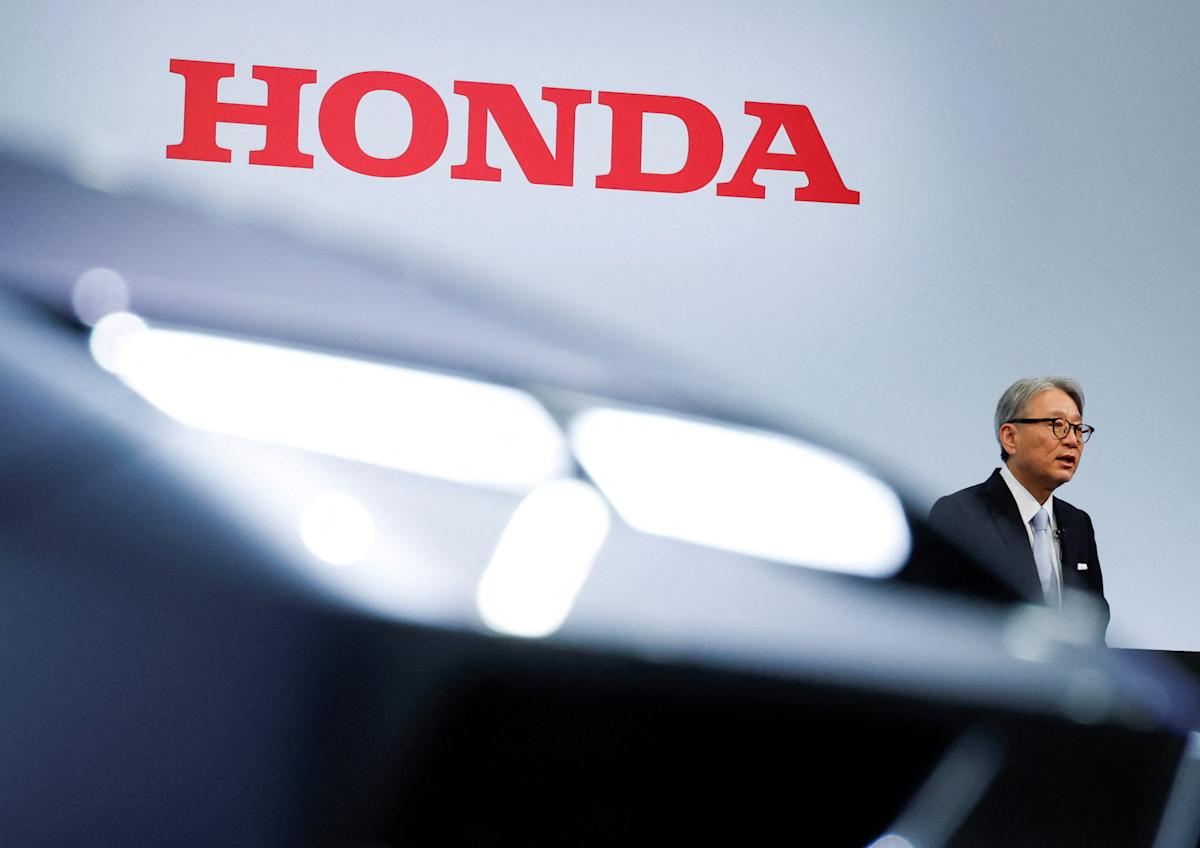
Honda Motor Company (HMC) has reported its first-ever loss since becoming a public entity over 70 years ago, primarily due to a significant strategic pivot towards electric vehicles (EVs) that resulted in substantial financial setbacks. However, an optimistic outlook driven by a renewed focus on hybrid technology has led to a positive reception from investors.
In its fiscal year ending March 2026, Honda recorded total losses related to EVs amounting to 1.579 trillion yen (approximately AUD $10 billion), culminating in an operating profit loss of 414.3 billion yen (around AUD $2.625 billion). Honda attributed these challenges to various factors, including increased tariffs and reduced vehicle sales due to semiconductor shortages. Despite these adversities, the company managed to implement widespread cost-cutting measures, maintaining profitability when excluding the losses from electric vehicle operations.
Looking ahead, Honda’s guidance for the upcoming fiscal year ending March 2027 projects further EV-related losses of 500 billion yen (about AUD $3.168 billion). Nonetheless, the company anticipates operating profits of 500 billion yen, which significantly exceeds Bloomberg’s consensus estimates of 212.4 billion yen (approximately AUD $1.35 billion). This hopeful forecast bolstered Honda’s American Depositary Receipts (ADRs), boosting their value by over 5% in response.
To strengthen its position in the North American market, Honda announced plans to introduce 15 new hybrid models by March 2030, signalling a strategic shift away from previously planned electric vehicle launches in favour of vehicles with mixed powertrains. By 2029, the company aims to introduce larger hybrid models in the D-segment, which encompasses full-size sedans, wagons, and SUVs.
Additionally, Honda has decided to suspend its plans to establish an EV battery supply chain in Canada, which reflects its current strategic reevaluation. At present, Honda offers five hybrid vehicles in its U.S. lineup, albeit in the form of mild hybrids rather than more efficient plug-in hybrids. Its sole electric vehicle, the Prologue, is essentially a rebranded Chevrolet Blazer EV, which has struggled in sales and is set to cease production in December.
In light of these developments, Honda is revising its long-term aspirations, moving away from a goal of being combustion-free by 2040. Instead, the manufacturer has set a new target for achieving carbon neutrality by 2050, a commitment that will include a blend of electric and hybrid vehicles alongside carbon offset initiatives. Future investments will still be directed towards next-generation EV technology, although Honda has yet to disclose specific financial outlays for these developments.
The company continues to grapple with the financial impacts of tariffs, having reported tariff-related expenses amounting to 346.9 billion yen (approximately AUD $2.2 billion) for the previous fiscal year. Honda operates manufacturing facilities in Canada, Mexico, Japan, and its primary plant located in Marysville, Ohio.
In summary, while Honda’s recent financial performance has raised concerns, the company’s shift towards hybrid vehicles combined with a solid operating profit forecast signals a potentially promising future as it navigates challenges in the evolving automotive landscape.