Spirit Airlines Faces Financial Crisis Amid Escalating Fuel Costs
Spirit Airlines’ future hangs in the balance as rising fuel prices put increasing pressure on an already struggling carrier. JPMorgan analyst Jamie Baker warns that if fuel prices reach $4.60 per gallon, Spirit could incur an additional $360 million in expenses, exceeding its cash reserves of $337 million. Such financial strain could lead to liquidation, with reports suggesting a possible shutdown within days. In response, Spirit is seeking emergency funding from the US government in exchange for an equity stake, with speculation about a potential $500 million rescue package.
Industry experts, including SDT Capital Advisors’ president Steve Trent, acknowledge the challenging position Spirit finds itself in. Wall Street’s reaction has been dramatic; after President Trump expressed interest in a potential buyer for the airline, Spirit’s stock surged by 100%, with further gains reaching over 600% the following day. However, the airline’s stock has plummeted by around 80% over the past year, highlighting persistent volatility.
Analysts remain cautious regarding government intervention. Baker raised concerns that such a move could provoke rival airlines like JetBlue and Frontier to seek similar aid, creating inequities among competitors. He asserted that government support for Spirit would be a significant gesture against established carriers such as Delta and United Airlines.
Spirit’s struggles are not new. The carrier has faced challenges for years, grappling with high debt and operational costs, intensified by a shift in consumer preferences toward better-value carriers. The ultralow-cost airline model is losing traction, leaving Spirit in a precarious position—caught between being too expensive for budget-conscious travellers and offering insufficient amenities to compete on quality.
Current financial woes are further exacerbated by a recent bankruptcy filing, marking Spirit’s second in recent years. The airline reported a staggering net loss of $2.7 billion in 2025, a substantial backlog from the $1.2 billion loss in 2024. Additional setbacks stemmed from a large-scale engine recall that grounded numerous planes.
As speculation mounts over the fate of Spirit, investors are questioning which airlines might benefit should the budget carrier cease operations. Raymond James analyst Savanthi Syth highlighted that Spirit’s liquidation, particularly during the industry’s typical post-holiday slowdown, was expected. She noted that Spirit lacks advance ticket sales since its customers often book last-minute, preventing cash flow that rival airlines rely on to weather slower seasons.
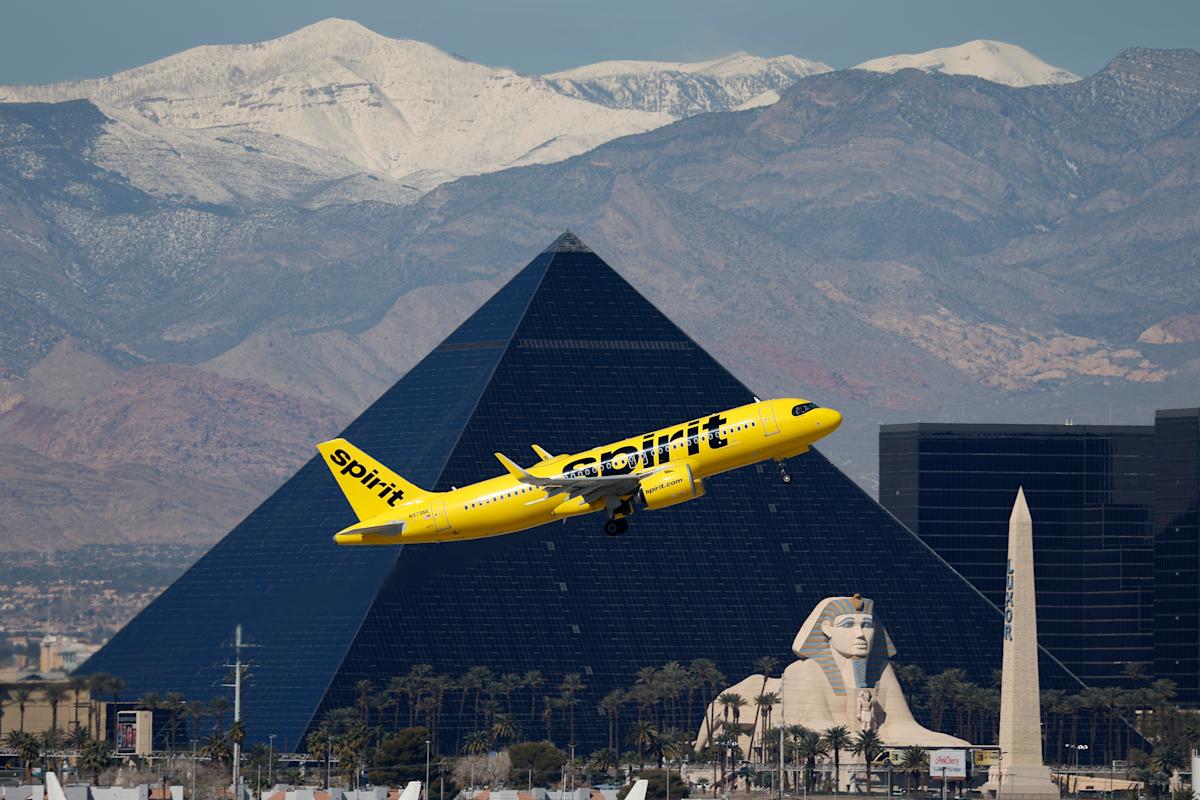
The competitive landscape is shifting, with Spirit’s distinctive yellow planes gradually disappearing from major airports. Earlier this year, United Airlines acquired Spirit’s last two designated gates at Chicago O’Hare Airport for about $30.2 million. Concurrently, JetBlue, United, and Frontier are ramping up flights to Spirit’s core hubs, including Fort Lauderdale and Orlando. Currently, Spirit has just 2% of the scheduled flights for the upcoming quarter, a stark indicator of reduced operational capabilities stemming from soaring fuel prices. By year’s end, it is projected that Spirit will be operating only 80 aircraft.
Syth anticipates that JetBlue and Frontier would emerge as the primary beneficiaries if Spirit were to cease operations. Following JetBlue’s aborted attempt to acquire Spirit for $3.8 billion in 2022, it has now become the dominant player overlapping with Spirit, suggesting that merger strategies remain prominent in the current market.
As established airlines like Delta, United, and American Airlines continue to strengthen their positions, trends within the industry appear to favour these major carriers. JPMorgan indicates a bullish outlook on these three, praising Delta’s strategy centred on premium products and United’s focus on capitalising on rising business and international travel needs.
In conclusion, Spirit Airlines stands at a critical juncture, grappling with the repercussions of rising operational costs and market competition, while simultaneously seeking rescue from potential downfall. The coming weeks will be pivotal in determining if this ultralow-cost carrier can navigate its financial turmoil or if it will be absorbed by larger competitors within the industry.