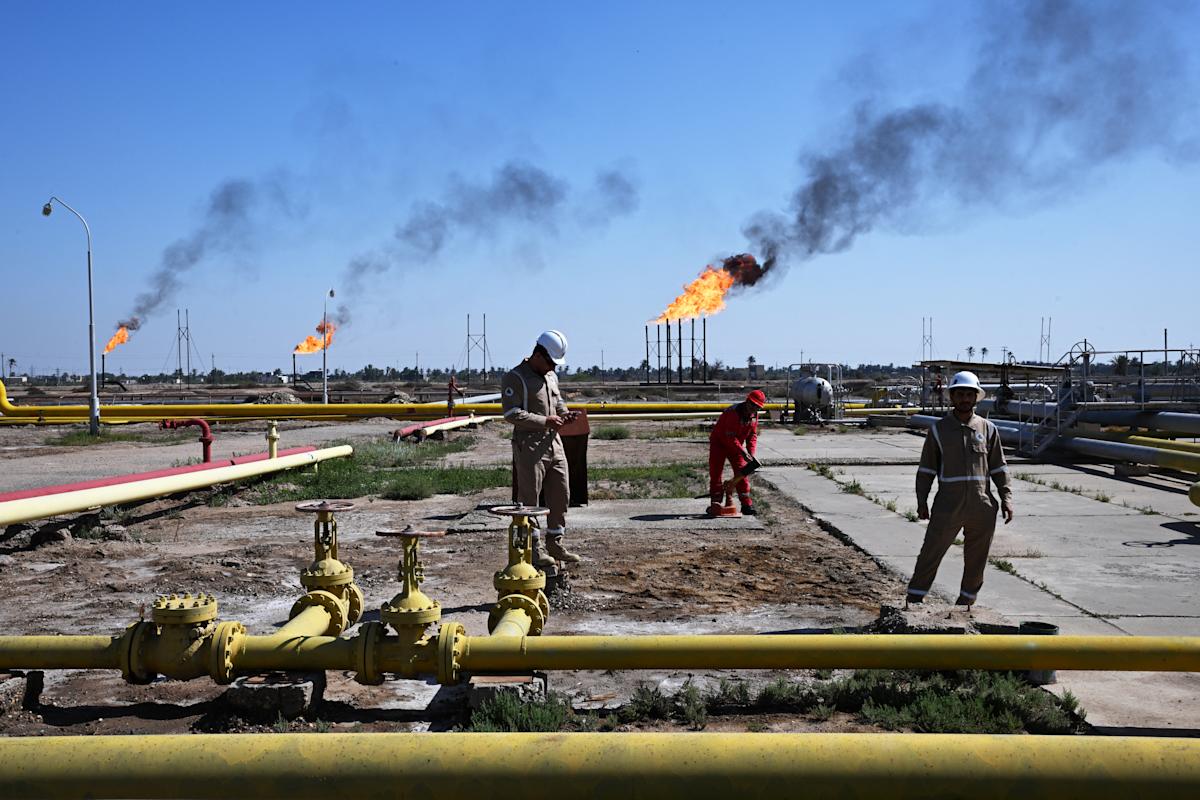
Surge in Oil Prices Following Trump’s Escalation of US Naval Blockade
Oil prices witnessed a significant uptick on Wednesday after former US President Donald Trump announced the continuation of the US naval blockade of the Strait of Hormuz, aimed at squeezing Iran’s economy. Brent crude futures soared approximately 6.5%, exceeding $118 per barrel, while the US benchmark West Texas Intermediate crude rose by nearly 6.4%, surpassing $106 per barrel.
The surge in prices escalated during midday trading owing to comments made by Trump in an interview with Axios, indicating that his administration would maintain the blockade over the strategically vital Strait of Hormuz, an essential channel for global oil transport. Reports from the Wall Street Journal also hinted at preparations for a prolonged blockade after Trump was said to have instructed aides to get ready for it.
According to Trump, the blockade strategy is perceived as more effective than military action, as he remarked, “They are choking like a stuffed pig, and it is going to be worse for them."
Despite Iran’s claim that lifting the blockade is critical for any negotiations, Trump remains firm in requiring Tehran to commit to a non-nuclear deal before considering any changes to the blockade. This impasse complicates the ongoing conflict with significant implications for global oil markets.
As the blockade continues, oil inventories are expected to diminish further, leading to additional price pressure. Goldman Sachs highlighted a drastic shortfall of 13.7 million barrels per day in April, attributed primarily to diminished traffic through the Strait of Hormuz, contributing to a drop in global oil stocks to near-historic lows.
Treasury Secretary Scott Bessent suggested that Iranian oil storage facilities, especially on Kharg Island—Iran’s primary export terminal—are nearing full capacity, which has compelled the regime to consider shutting down production entirely. Bessent noted that Iran’s oil production shutdown would emerge as a serious risk due to the country’s ageing infrastructure, even as estimates suggest that they may have only 12 to 22 days left before their storage reaches maximum capacity.
In a broader context, the market is also reacting to developments concerning the United Arab Emirates’ decision to exit the Organisation of the Petroleum Exporting Countries (OPEC), which may further reshape global oil supply dynamics.
Upcoming statements from Federal Reserve Chair Jerome Powell are anticipated, especially regarding the potential economic impact of the ongoing conflict. While expectations lean toward stability in interest rates, Powell’s comments on the situation’s implications for the economy will be closely monitored by market participants.
In summary, the ongoing geopolitical tensions surrounding the US-Iran relationship and the ramifications of supply cuts driven by blockade conditions have ignited volatility in oil prices, underlining the interconnected nature of global energy markets amid heightened conflict.