Table of Contents
Rising Demand for Food Charity Amid Australia’s Cost-of-Living Crisis
The demand for food charity services across Australia is escalating significantly due to the ongoing cost-of-living crisis. Economic pressures resulting from global events, increased interest rates, and a severe rental shortage are leaving many working Australians struggling to afford basic necessities, including food.
Ann Cooper, the operator of the Adelaide-based food charity Cos We Care, reports that the number of individuals accessing her organisation’s services has doubled in just six months. Meanwhile, Randa Beirouti, founder of the food assistance initiative Reaching Out in the Inner West Melbourne, indicated that the requests for help have grown "exponentially."
The St Vincent de Paul Society noted a 15% rise in individuals seeking assistance throughout Australia in December, while the 2025 Foodbank Australia Hunger Report revealed that approximately 3.5 million households—about one in three—have faced food insecurity.
Escalating Demand for Food Aid
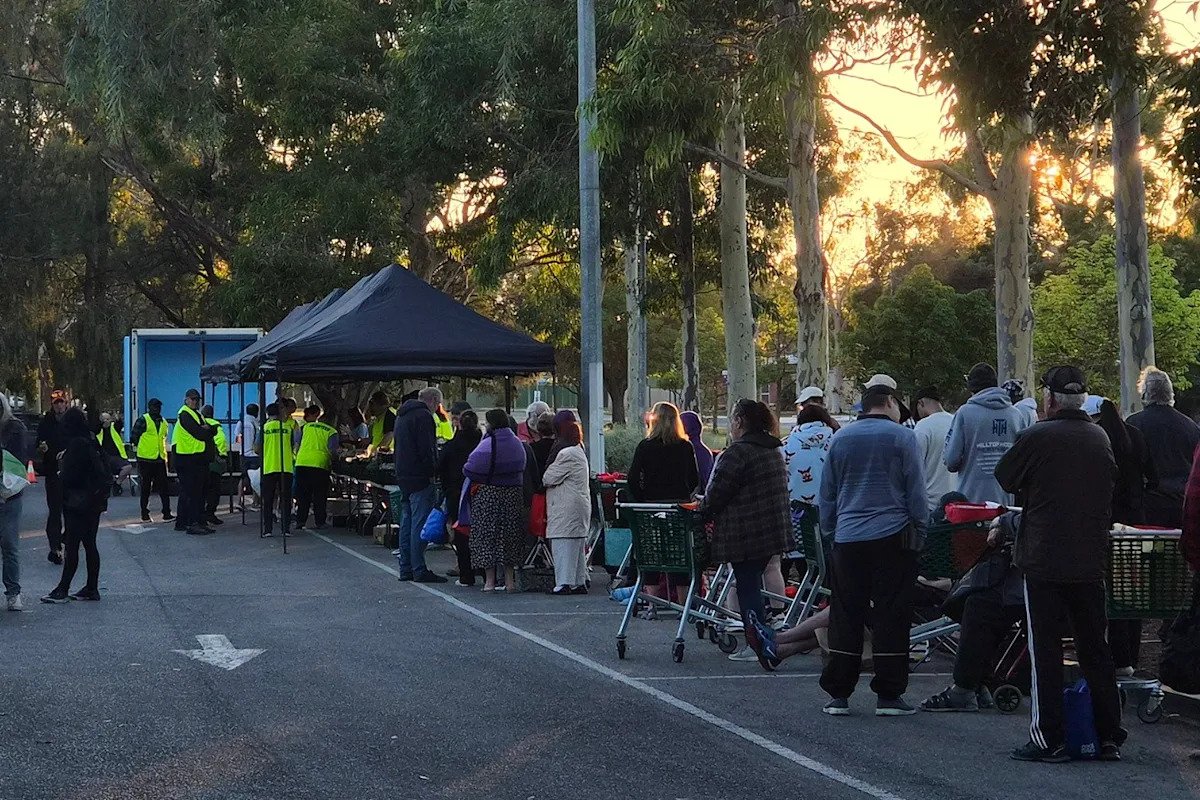
At the start of the year, Cos We Care was assisting around 60 individuals by providing food hampers. However, Cooper shared that demand surged unexpectedly, with the service now catering to between 100 and 120 people. The demographic seeking assistance has notably shifted; many clients are employed but still find it challenging to afford food due to escalating living costs.
Cooper explained, "Some have jobs and are struggling with rent and other bills, while others may be unemployed or not receiving any benefits." Importantly, her charity does not require proof of income or Centrelink benefits to access aid. "If you believe you are in need, we will provide you with food," she said, although clients must arrive early—by 7 AM—to receive assistance.
According to Foodbank Australia, approximately 20% of Australian households are facing severe food insecurity, with many individuals forgoing meals entirely. The housing crisis exacerbates this issue; nearly half of all renters are experiencing food deprivation, often forced to choose between paying rent and purchasing food. In Adelaide North, where Cos We Care operates, over 50,000 households are severely impacted by food insecurity.
Broader Economic Context
Australia’s economic landscape is further complicated by international turmoil, which has recently contributed to a rise in the official cash rate by the Reserve Bank of Australia (RBA) to 4.1%. This decision, made with a narrow board majority of 5-4, reflects the ongoing uncertainties within the global economy. Treasurer Jim Chalmers acknowledged, "It’s not a surprising decision, but it doesn’t make it any easier for millions of Australians with a mortgage."
Simultaneously, soaring petrol prices are straining household budgets, compounding the financial distress faced by many Australians. The combination of increased costs for borrowing and essential goods is forcing families to tighten their spending, impacting both groceries and discretionary purchases.
Conclusion
As Australia’s cost-of-living crisis continues to unfold, the pressure on food charities is likely to mount, highlighting a rising need for support among vulnerable populations. The landscape of assistance is changing, with many people requiring help despite holding jobs and facing financial struggles. As community organisations step up to address these needs, the ongoing economic challenges will necessitate a concerted effort to provide food security for affected households.